
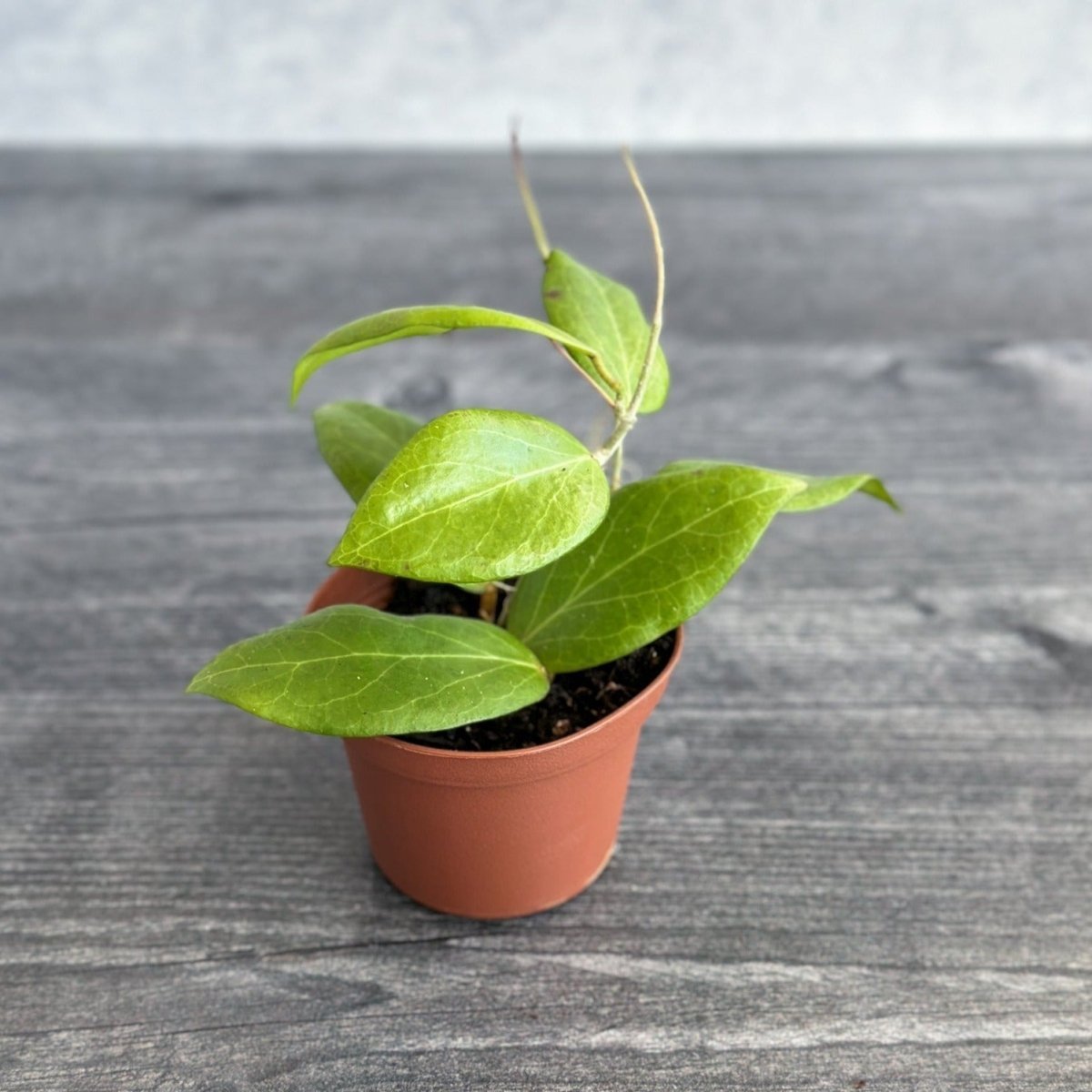
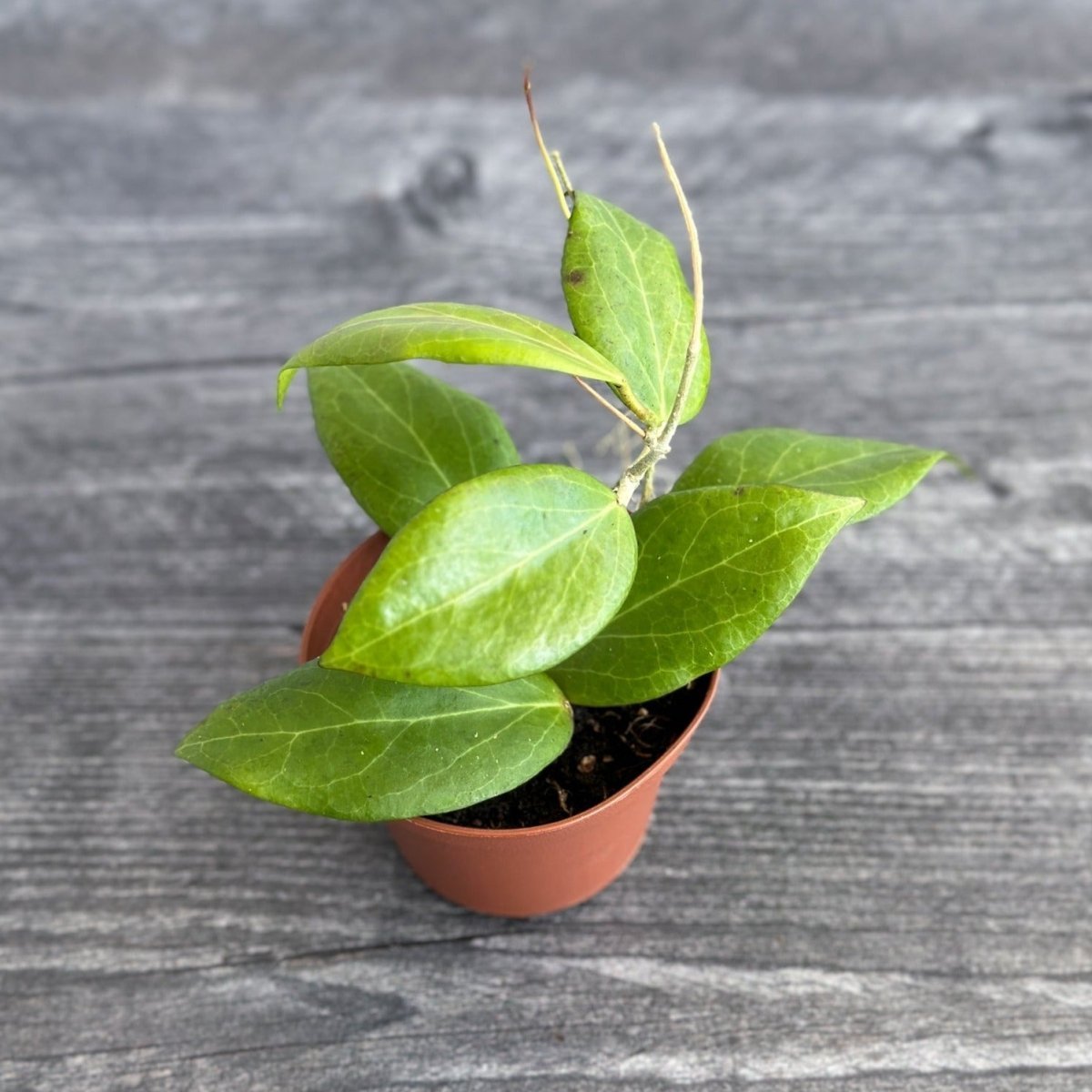
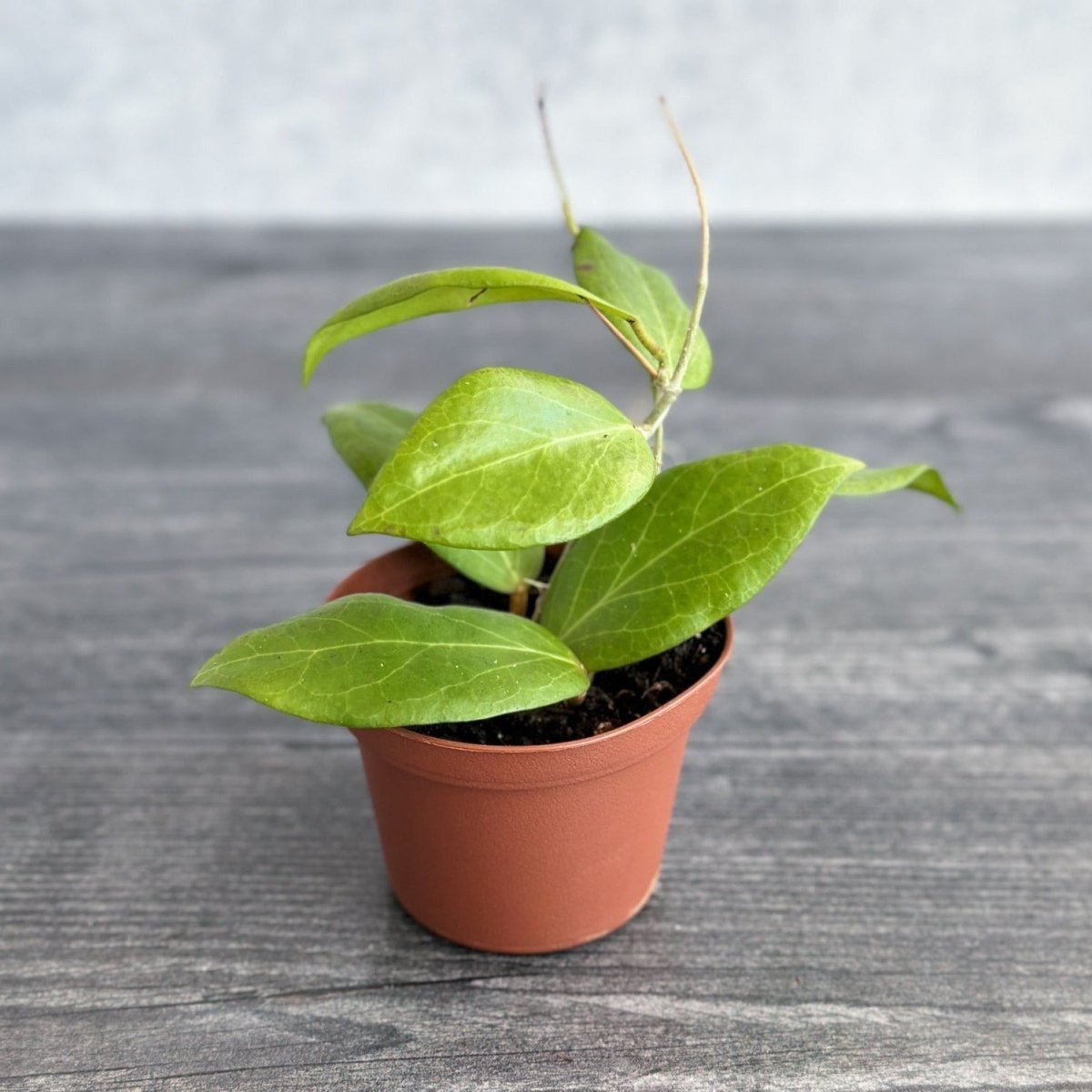
Hoya cutis-porcelana ‘Porcelain Skin’
Rare Endemic Hoya | Porcelain-Like Leaves | Collector’s Gem
Bring home one of the rarest Hoyas in cultivation—Hoya cutis-porcelana, known as the “Porcelain Skin” Hoya. Discovered in 2013 on the Philippine islands of Samar and Biliran, this epiphytic vine is prized for its stiff, glossy leaves and exquisite umbels of tiny, green-white flowers. Perfect for the serious plant enthusiast, its porcelain-textured foliage and distinctive veining make it an instant conversation piece.
Why It’s Special
- Extremely Rare & Endemic: Only found in shady limestone forests of Samar & Biliran, Philippines
- Porcelain-Textured Leaves: Thick, wedge-shaped foliage with down-curved margins and prominent secondary ribs
- Unique Flower Clusters: 8–12 star-shaped blossoms per umbel, held on warted pedicels, lightly scented
- Compact, Trailing Habit: Ideal for hanging baskets, mini-trellises, or mounted displays
Plant Profile
| Attribute | Details |
|---|---|
| Botanical Name | Hoya cutis-porcelana |
| Common Name | Porcelain Skin Hoya |
| Family | Apocynaceae |
| Native Range | Samar & Biliran Islands, Philippines |
| Growth Habit | Epiphytic, compact vine (up to 2 ft trailing) |
| Flowering | Umbels of 8–12 small, green-white flowers; lightly sweet fragrance |
| Leaf Size | 2–3 cm long; leathery with glossy upper surface, matte underside |
Care Guide
- Light: Bright, indirect light. Some morning/late afternoon sun enhances foliage sheen—but avoid scorching.
- Water: Allow top 1–2″ of well-draining mix to dry between waterings. Over-watering can cause root-rot.
- Soil: Specialized epiphytic mix (orchid bark + perlite + charcoal) to mimic tree-bark humus.
- Humidity: Prefers 60–80% humidity—ideal for terrariums, greenhouse shelves, or pebble trays.
- Temperature: 65–85°F (18–29°C); avoid temperatures below 60°F.
- Feeding: Monthly during active growth with a balanced, diluted orchid or Hoya fertilizer.
- Propagation: Stem cuttings in water or bark-based medium; choose nodes from mature vines.
- Pests: Watch for mealybugs, spider mites, scale; wipe leaves with neem solution as needed.
- Toxicity: Non-toxic to pets & people, though not intended for consumption.
Enthusiast Tips
- Mount It: For a true collector’s display, mount cuttings on cork bark and mist lightly—emulates its natural epiphytic habitat.
- Light Stress for Flowering: Slightly higher light levels (without direct midday sun) can trigger more frequent blooming.
- Rotate Regularly: Encourages even growth on trailing vines and full floral displays on both sides of the plant.
Reviews
There are no reviews yet.