
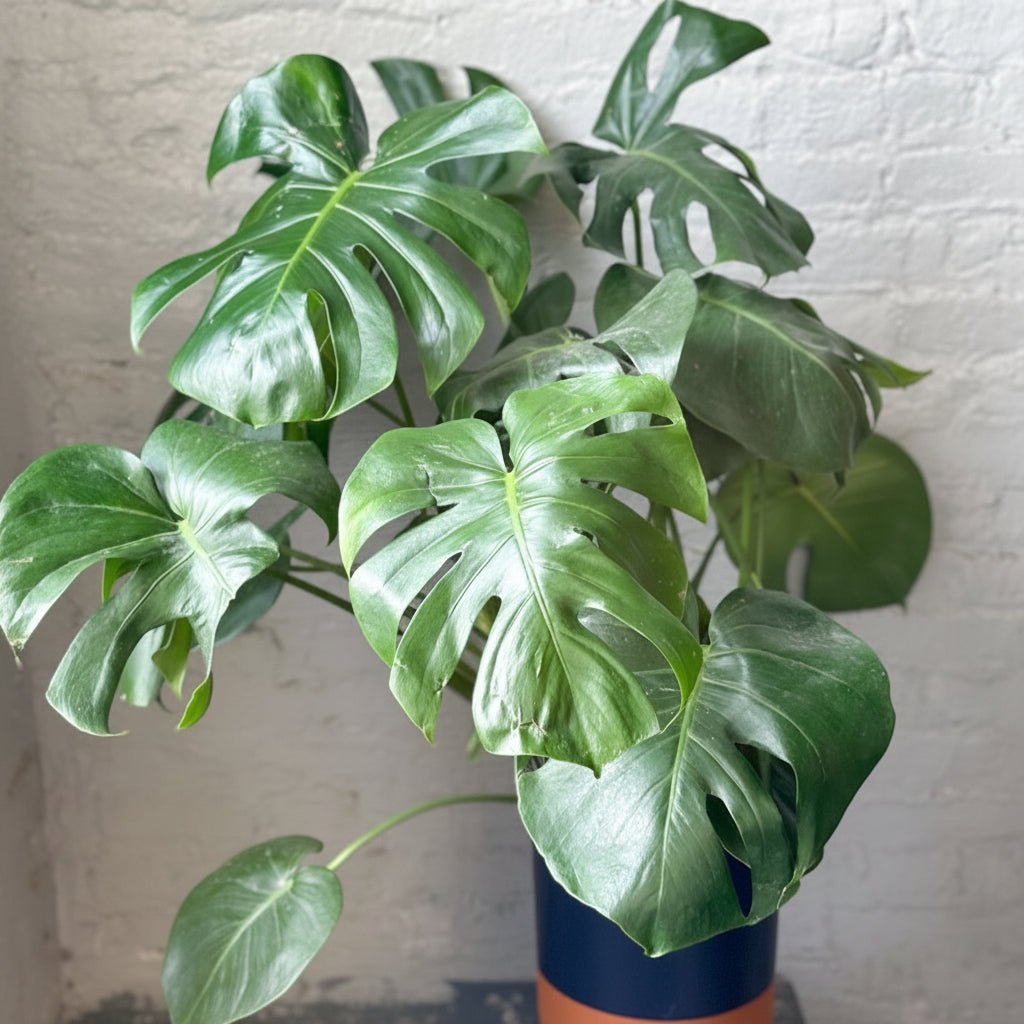
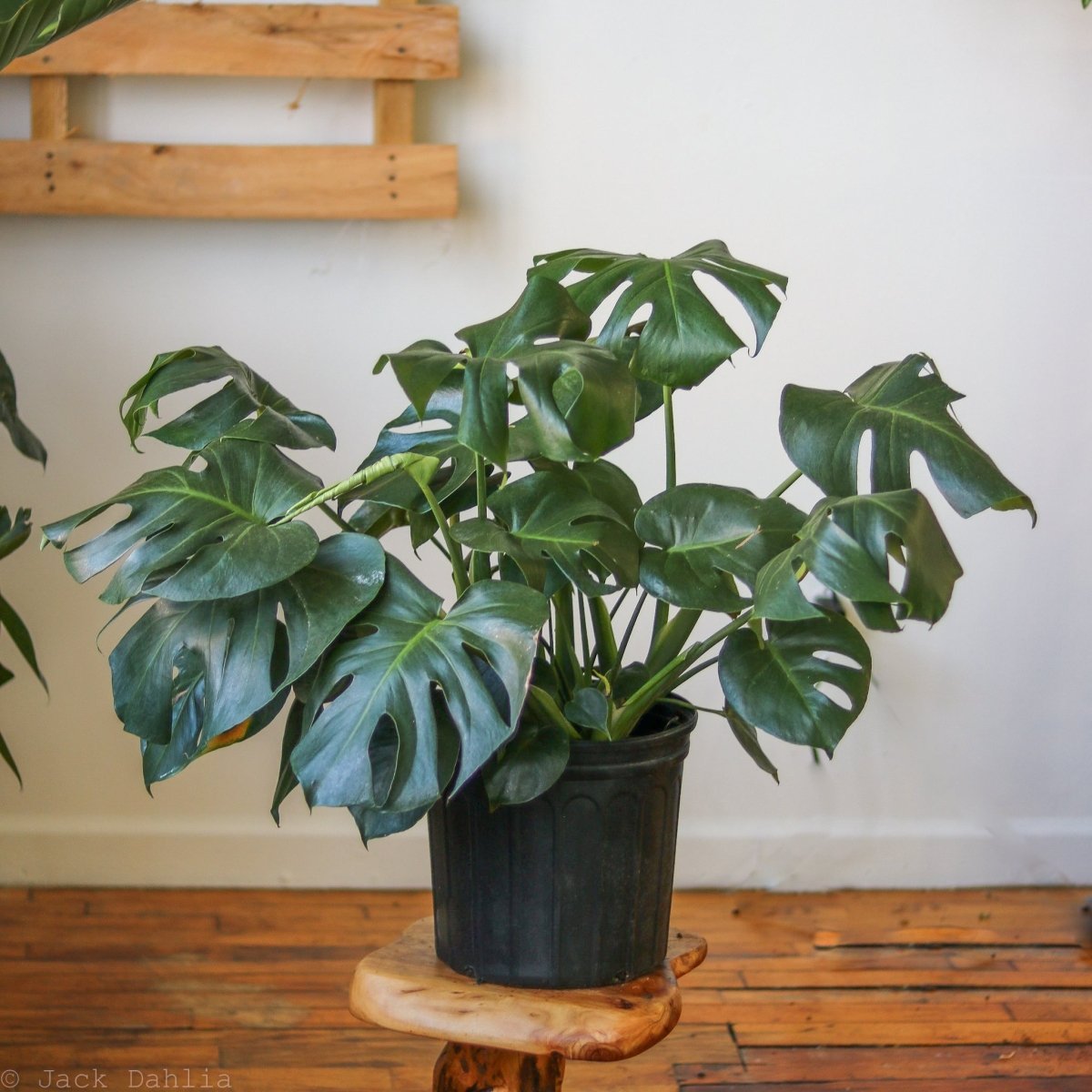
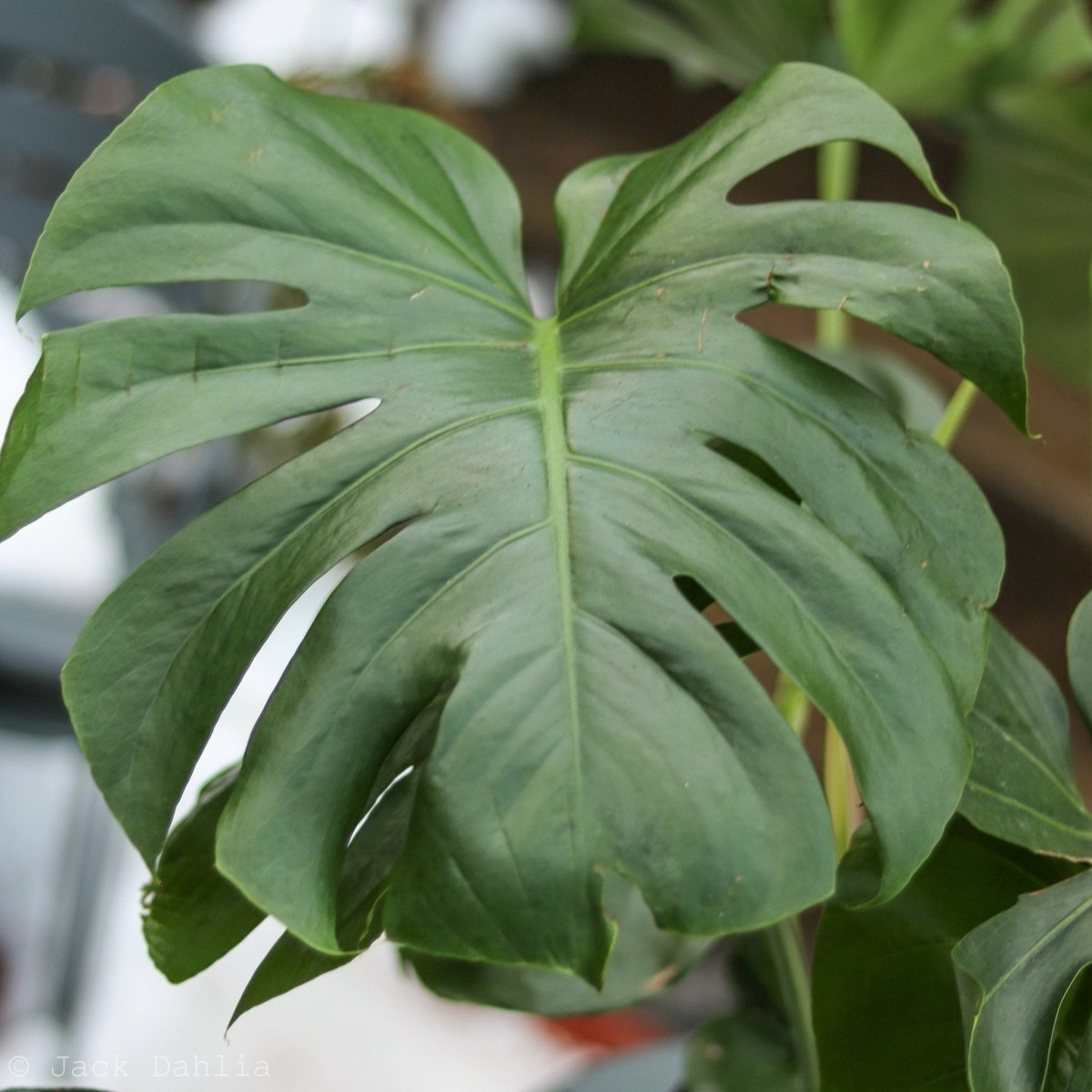
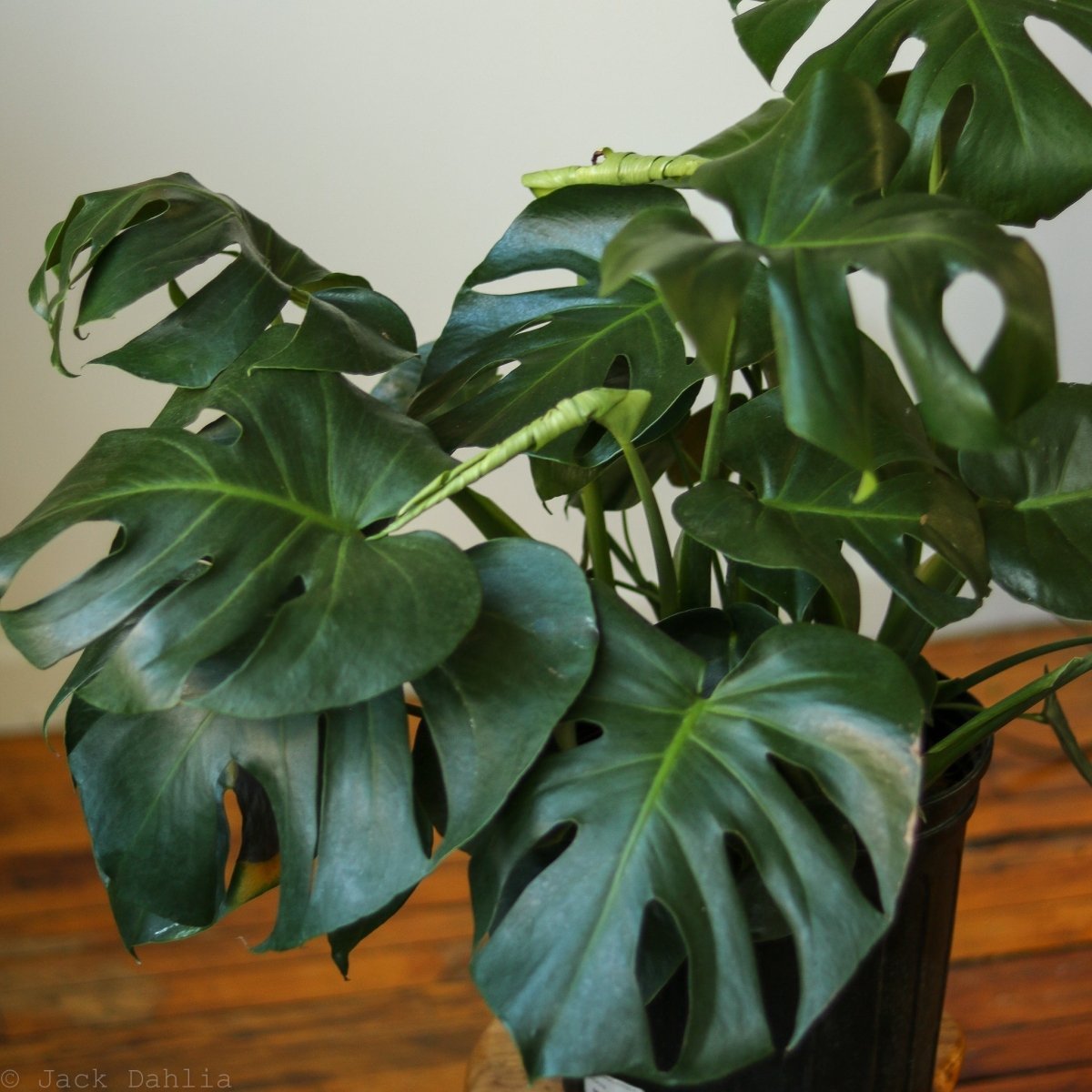
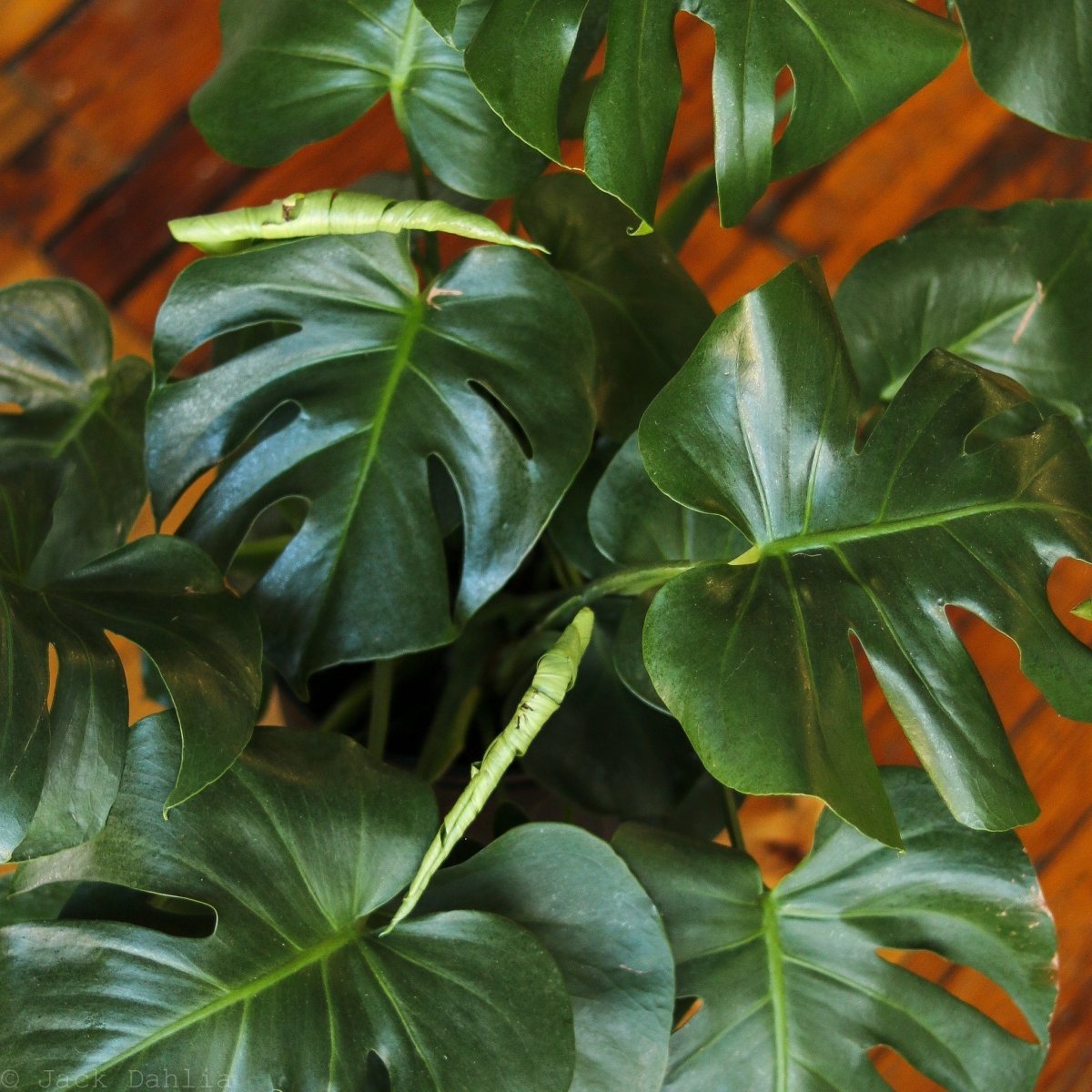
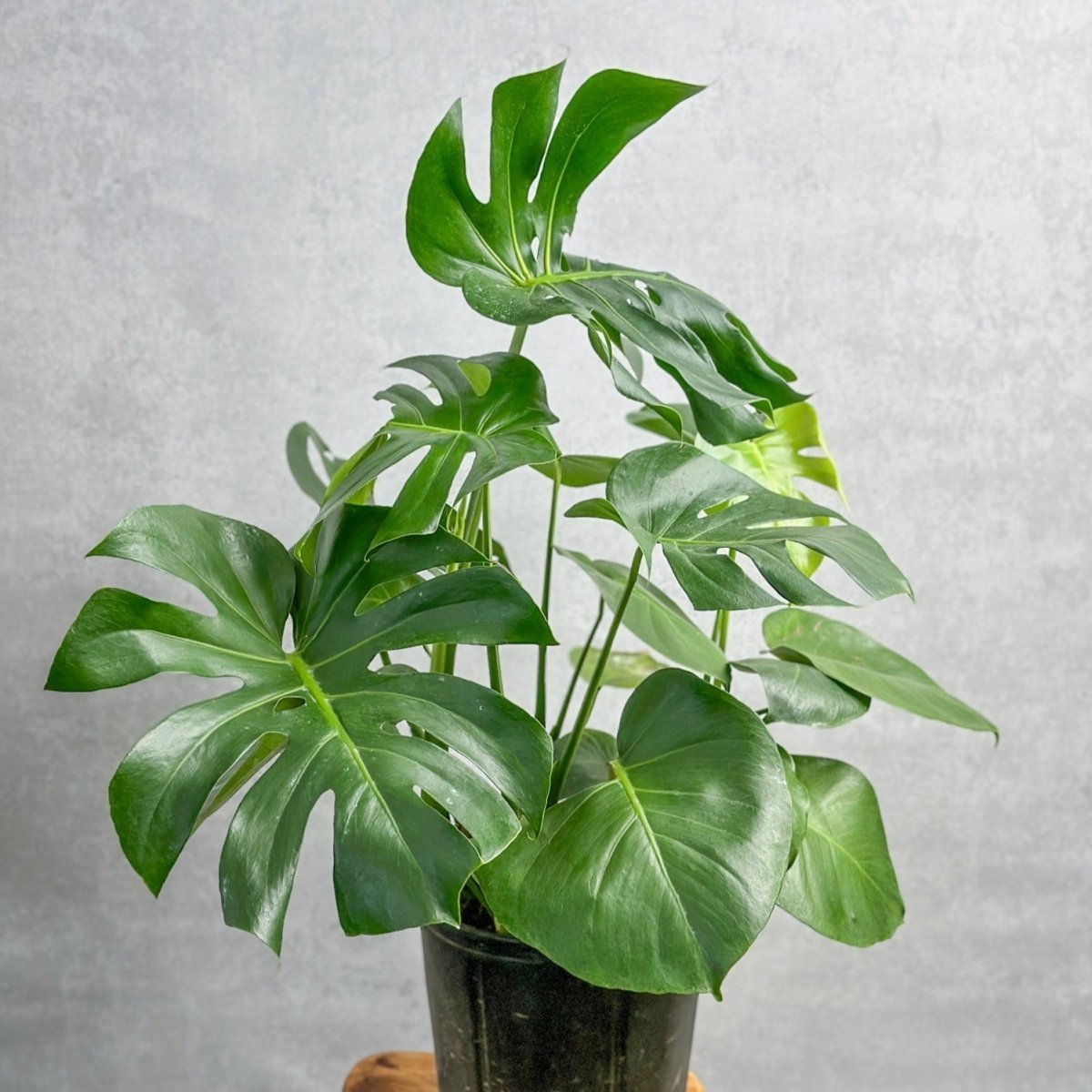
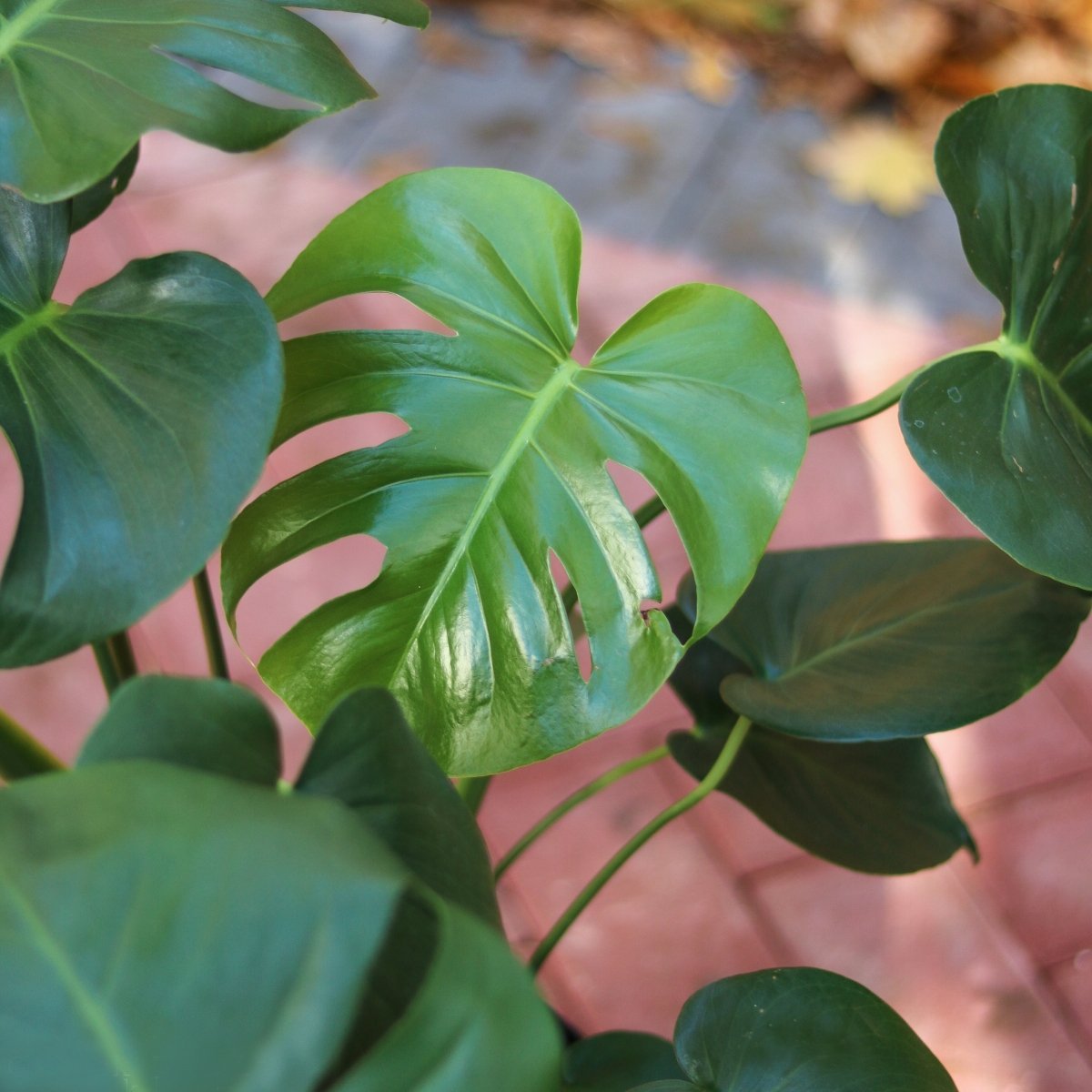
Monstera deliciosa is the plant that defined the modern indoor jungle. Its large, glossy leaves develop dramatic natural splits — called fenestrations — as the plant matures, creating a bold, sculptural presence that works in virtually any interior. It’s fast-growing, genuinely easy to care for, and one of the most recognizable houseplants in the world for good reason.
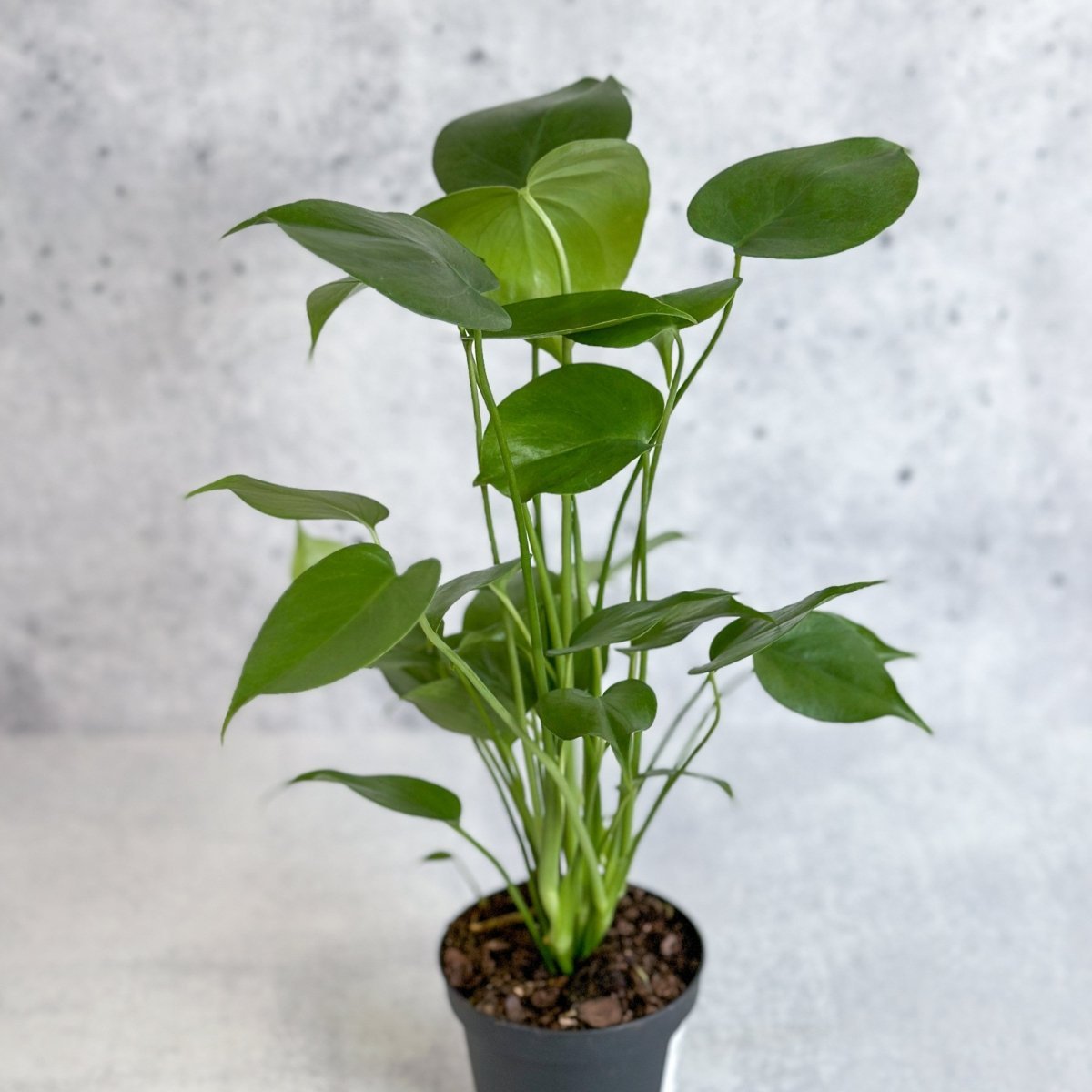
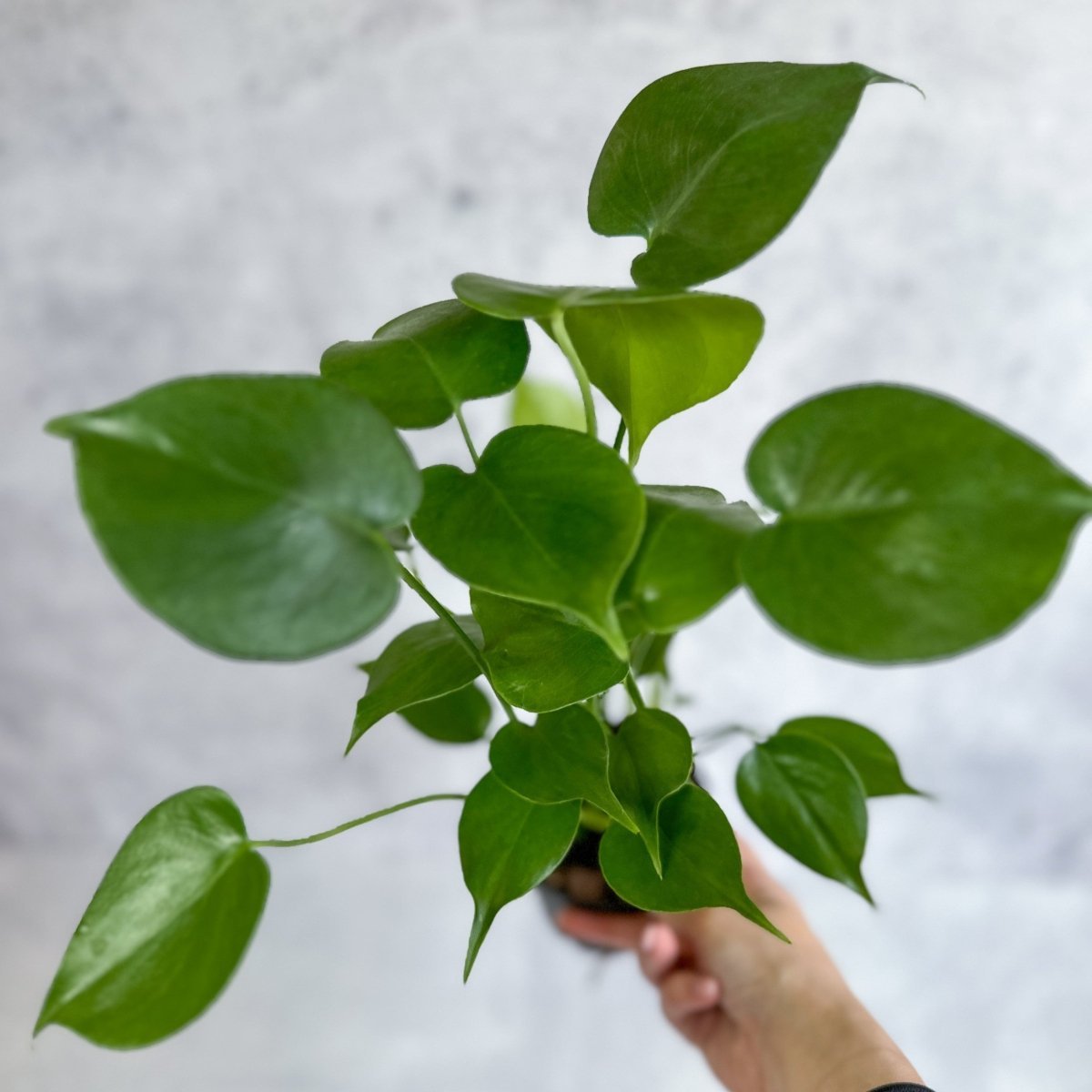
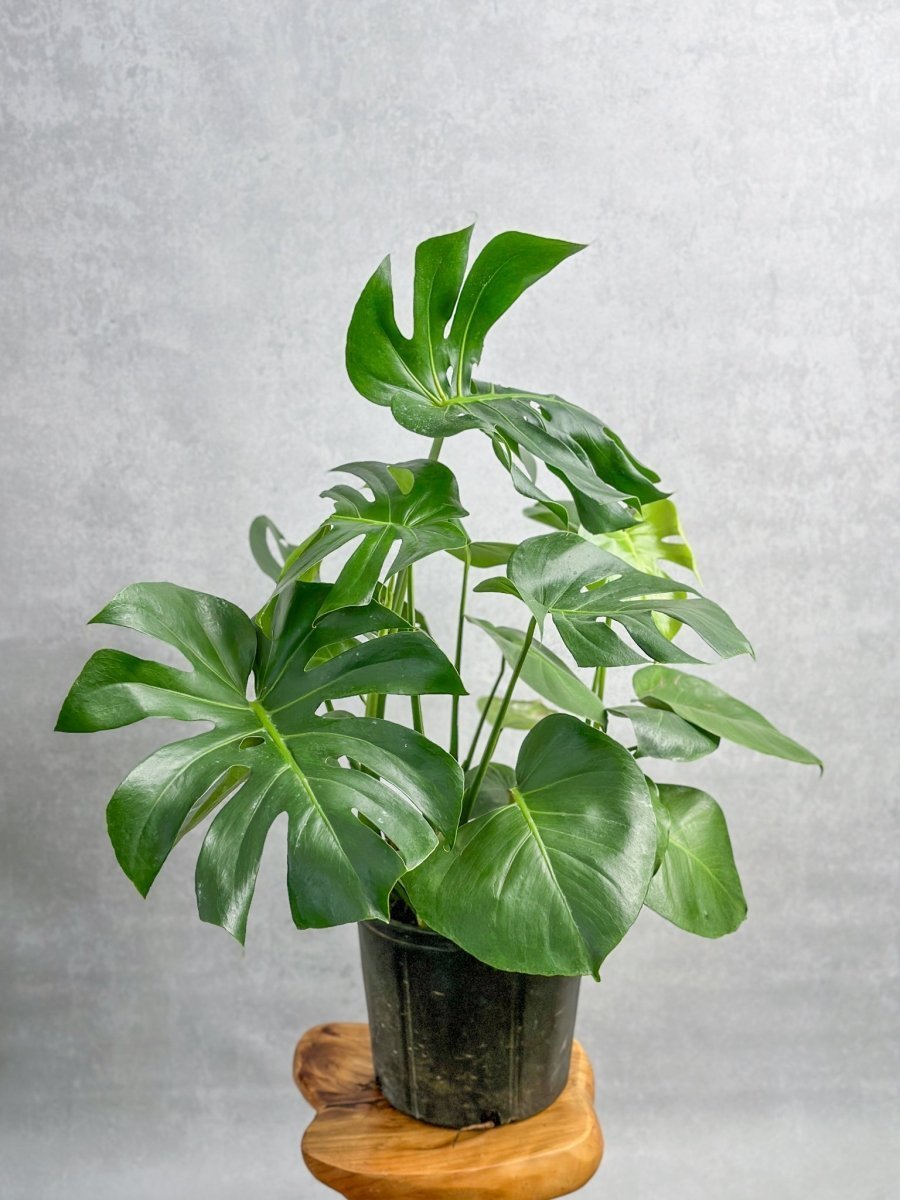
Available in three sizes: a compact 4″ starter, a mid-size 6″ with established growth, and a statement-ready 10″ floor specimen with fully fenestrated leaves.
Toxicity note: Toxic to cats, dogs, and humans if ingested. Keep out of reach of pets and children.
What Makes This Plant Special
- Iconic fenestrated leaves: The natural splits develop as the plant matures — larger, more established plants produce increasingly dramatic leaf patterns.
- Fast grower: With adequate light, Monstera deliciosa produces new leaves regularly and grows visibly month to month.
- Scales with your space: Works as a tabletop plant at 4″, a shelf statement at 6″, or a full floor specimen at 10″.
- Genuinely low maintenance: Tolerates lower light, irregular watering, and average humidity without complaint.
- Why the leaves split: Fenestrations allow light to pass through the canopy and wind to move through the leaves without damage — a functional adaptation from its native rainforest habitat in Mexico and Panama.
Ed’s Plant Profile
- Botanical Name: Monstera deliciosa
- Pronunciation: mon-STER-ah de-lis-ee-OH-sah
- Common Names: Monstera, Split-Leaf Philodendron
- Family: Araceae
- Native Range: Tropical rainforests of Mexico and Panama
- Growth Habit: Climbing aroid; benefits from a moss pole or trellis as it matures
- Toxicity: Toxic to cats, dogs, and humans if ingested
Care Guide
- Light: Medium to bright indirect light is ideal. Tolerates lower light but produces fewer and smaller fenestrations. More light = faster growth and more dramatic splits. Avoid direct sun which scorches the leaves.
- Water: Water thoroughly when the top 1–2″ of soil are dry. Avoid consistently soggy soil — root rot from overwatering is the most common issue. Yellow leaves usually signal too much water.
- Soil: Well-draining potting mix. Adding perlite improves drainage and reduces overwatering risk.
- Humidity: Prefers moderate to high humidity but adapts well to average indoor conditions. No misting required.
- Temperature: 65–85°F. Keep away from cold drafts and temperatures below 60°F.
- Fertilizer: Every 2–4 weeks during spring and summer with a balanced liquid fertilizer. Skip in fall and winter.
- Support: As the plant grows, a moss pole or trellis encourages larger, more fenestrated leaves — Monstera naturally climbs in the wild.
- Pruning: Remove yellowing leaves at the base. Trim leggy growth to maintain shape.
- Propagation: Stem cuttings with a node root easily in water or moist soil.
- Pests: Watch for spider mites, especially in dry conditions. Wipe leaves regularly with a damp cloth.
Troubleshooting
- Yellow leaves: Overwatering. Let soil dry more between waterings and check pot drainage.
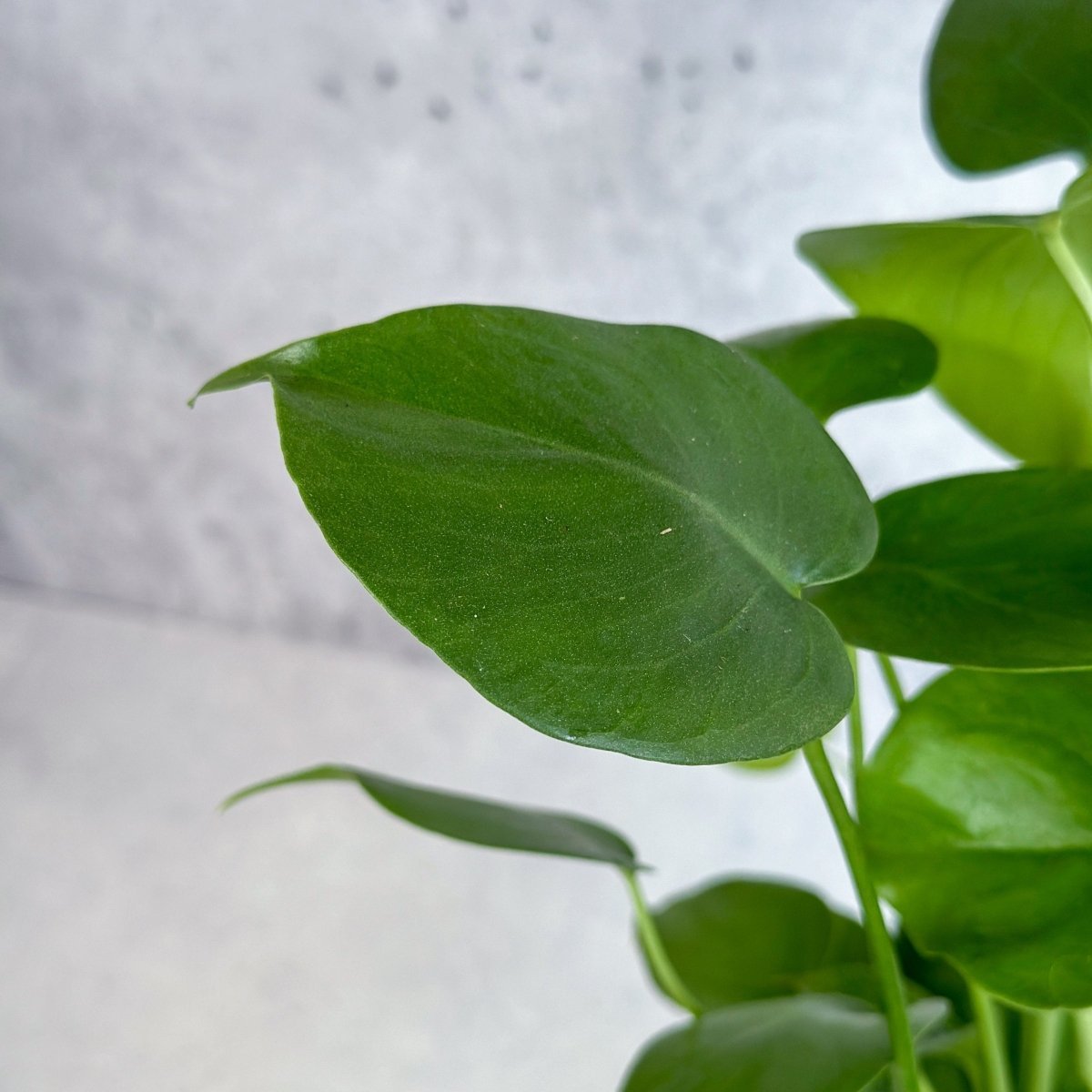
- No fenestrations on new leaves: Insufficient light or the plant is still young. Move to a brighter spot and add a moss pole to encourage mature leaf development.
- Brown, crispy leaf edges: Low humidity or underwatering. Water more consistently and consider a humidifier nearby.
- Leggy growth with small leaves: Needs more light. Move closer to a window.
- Aerial roots: Normal and healthy — these are how Monstera climbs in the wild. You can tuck them into the soil or direct them onto a moss pole.
Read our Monstera Care Guide for expert tips on moss poles, propagation, and encouraging larger fenestrations. Also available: Monstera adansonii for a compact, hole-leaf alternative.
Paige Santillo (verified owner) –
This is such a big and beautiful plant! Leaves are so green and healthy and it came with some new leaves about to grow in. My mom got this for my as a Christmas gift and was so surprised at how big it was (but in a good way). Communication around delivery was excellent as well. They were very clear of the window of time that the plant may arrive and sent multiple reminder emails and texts. Very efficient process.
Lauren (verified owner) –
Absolutely beautiful plant, deliviered via UPS within stated time frame. Obviously packaged with care.
Valeria Rosseau (verified owner) –
The plant came in good condition, no broken leaves and so far it’s doing good.