
Glossy Foliage and Long-Lasting Tropical Color
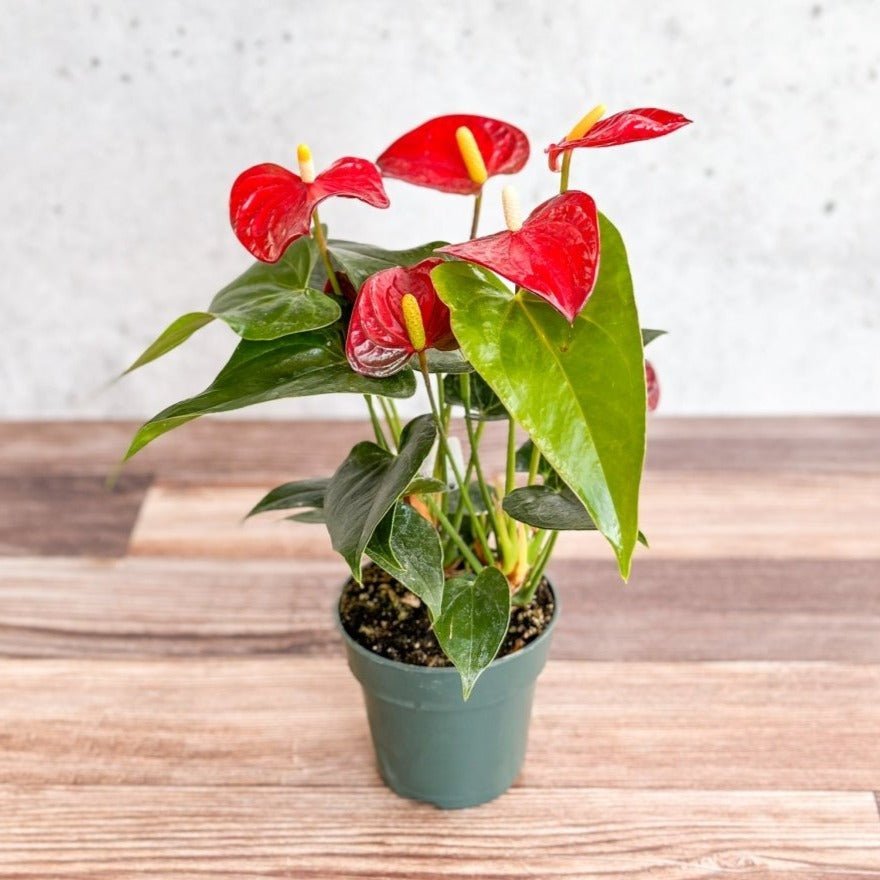
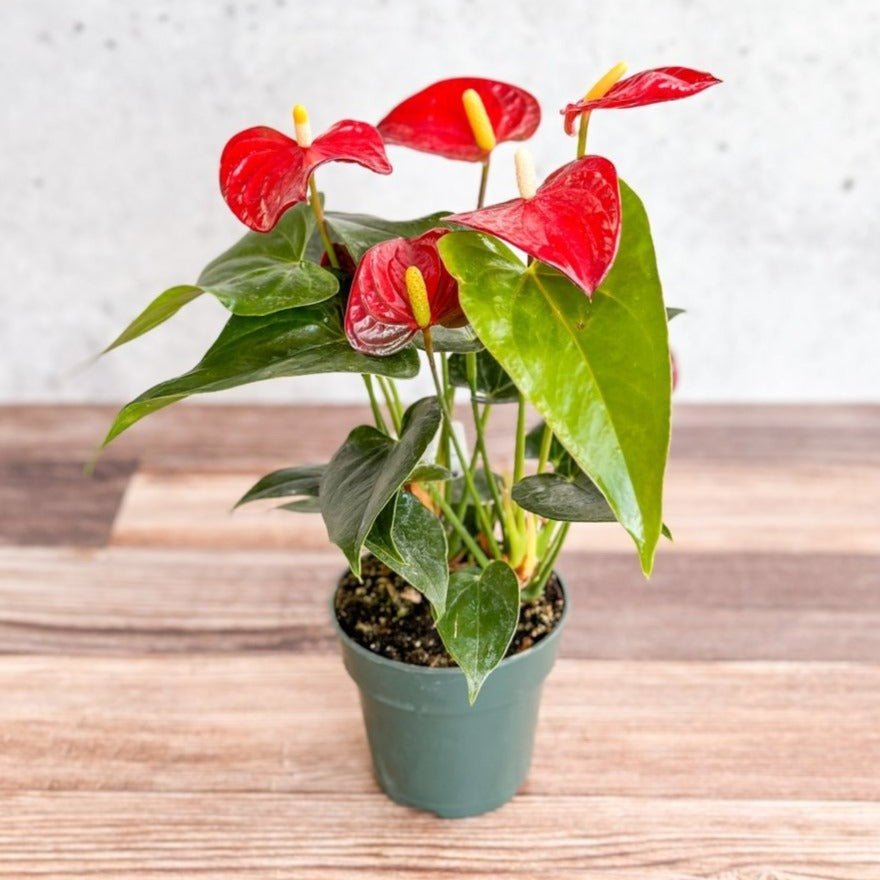
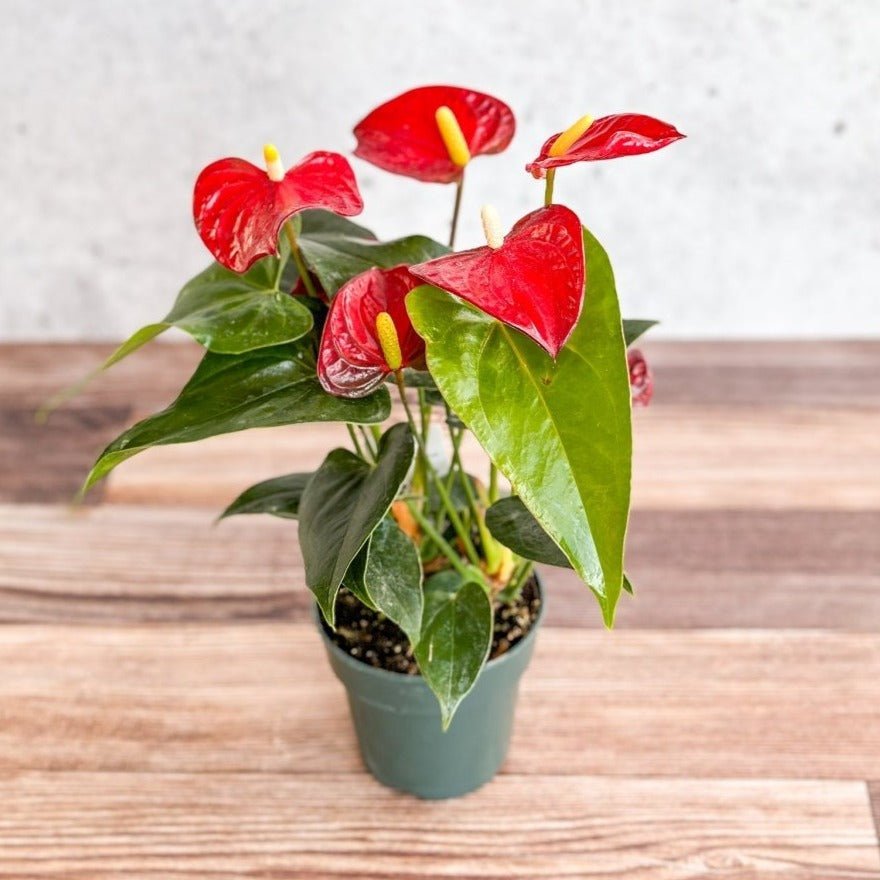
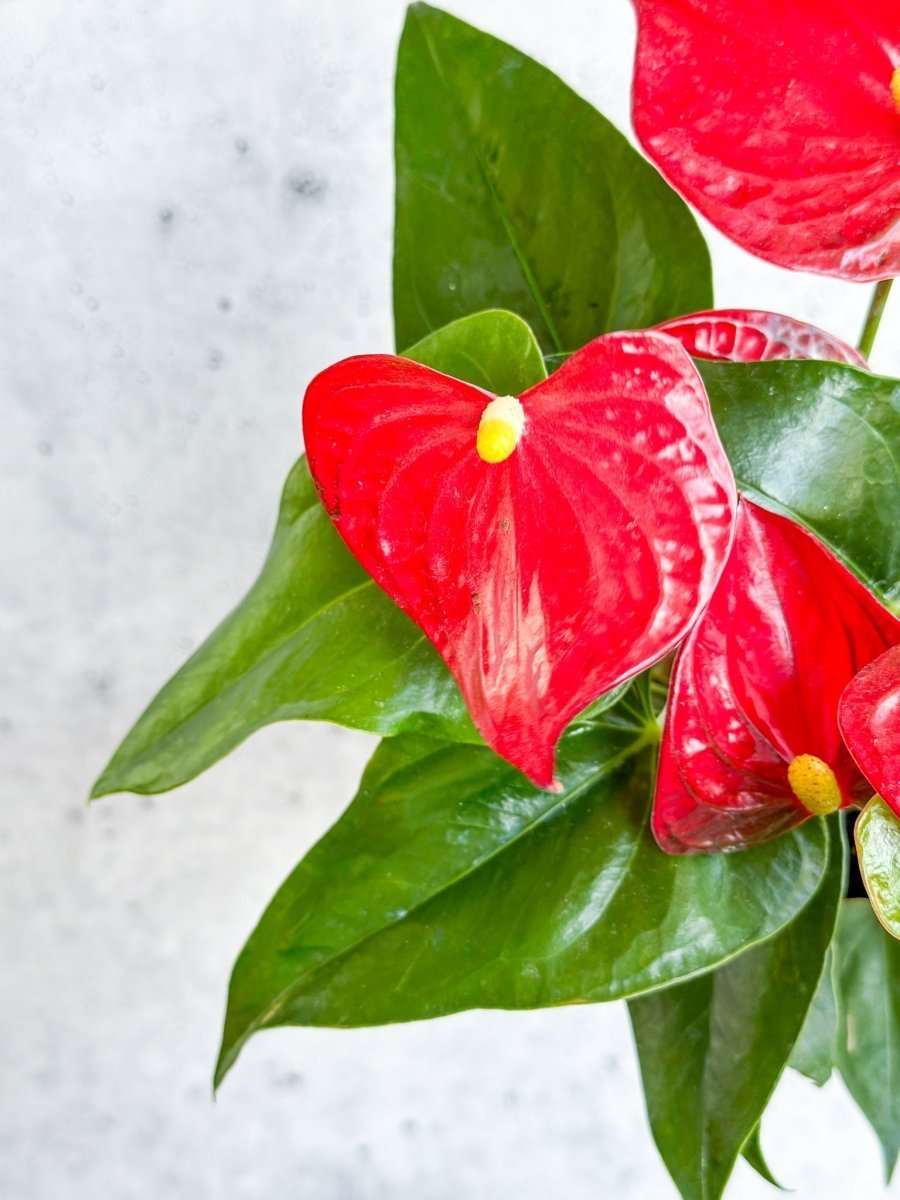
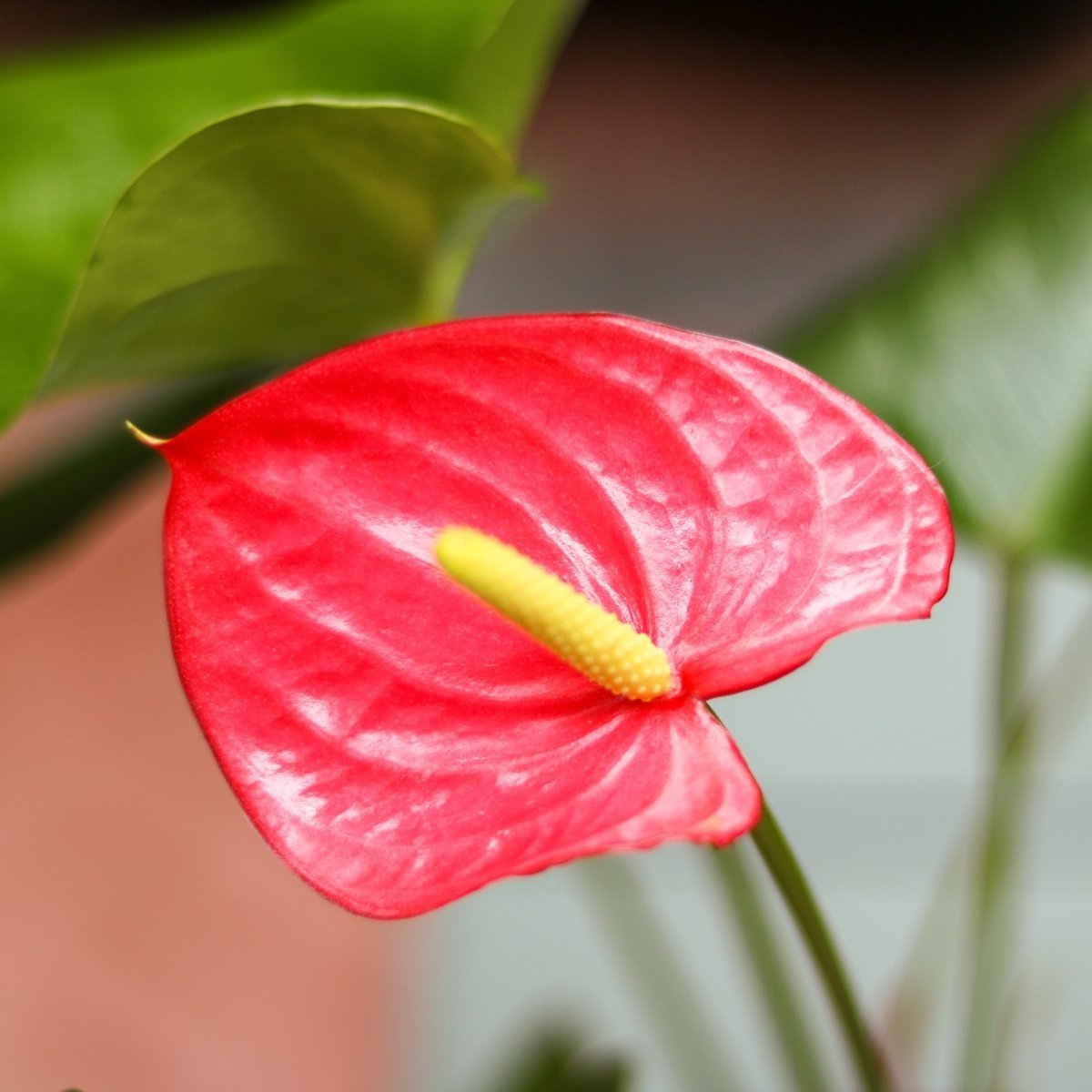
The Anthurium andraeanum, commonly known as the Flamingo Flower, is a tropical houseplant loved for its glossy, heart-shaped leaves and colorful, waxy blooms. Its upright growth and vibrant appearance make it a beautiful choice for desks, shelves, countertops, and bright indoor spaces.
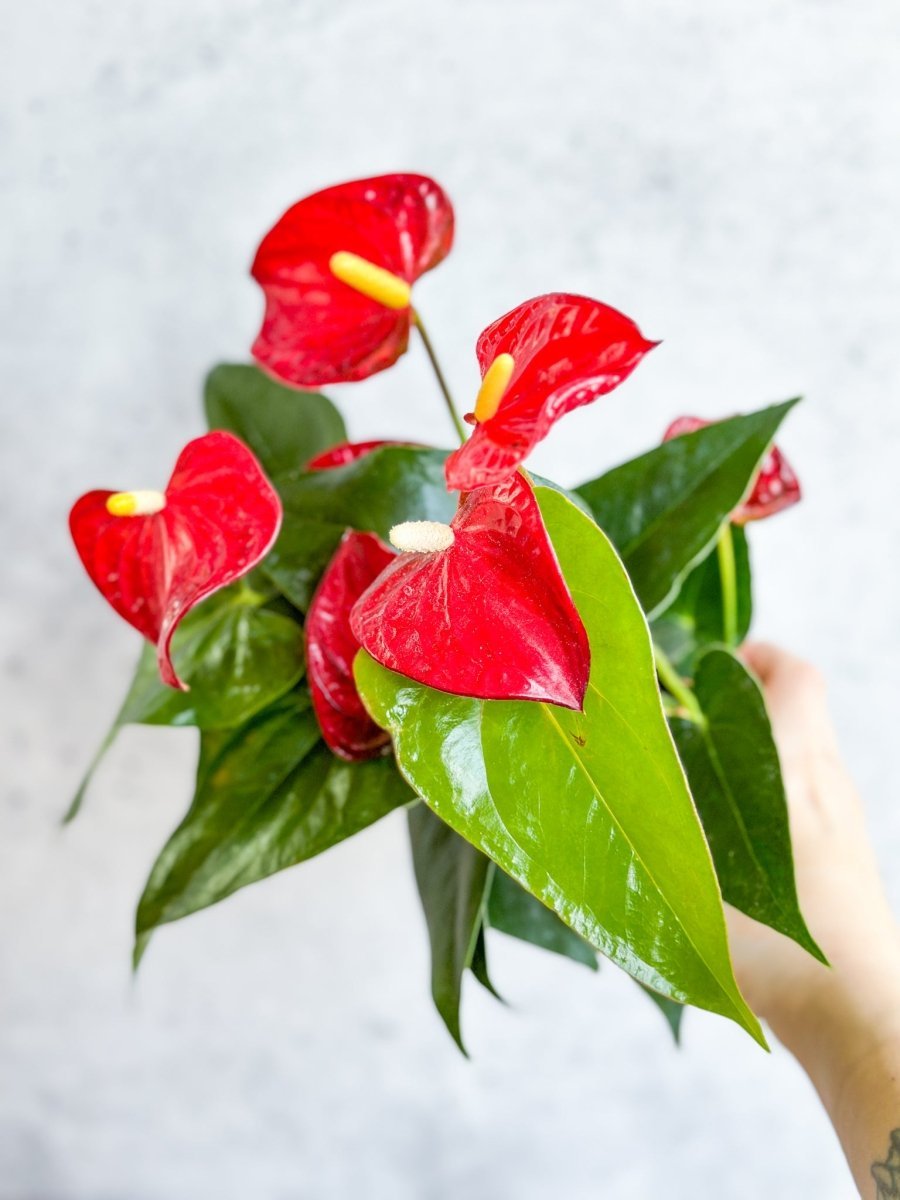
The colorful part commonly called the flower is actually a modified leaf called a spathe. The plant’s true flowers are the tiny blooms arranged along the central spike, known as the spadix.
Why You’ll Love It
Glossy tropical foliage, colorful long-lasting spathes, and a compact upright shape that fits easily into indoor spaces.
Plant Details
- Botanical name: Anthurium andraeanum
- Common names: Flamingo Flower, Tail Flower, Painter’s Palette, Painted Tongue Plant
- Plant family: Araceae
- Native range: Colombia and Ecuador
- Growth habit: Compact, upright, and clumping
- Pot size: Available in a 4-inch nursery pot
- Light: Bright, indirect light
- Water: Allow the upper portion of the soil to dry before watering
- Pet safety: Toxic if chewed or ingested
- Experience level: Intermediate
Flamingo Flower Care
Light
Anthuriums grow best in bright, indirect light. Good light encourages stronger growth and more frequent blooming. An east-facing window or a position near a filtered south- or west-facing window is often ideal.
Avoid prolonged direct sunlight, which may bleach or scorch the leaves. In very low light, the plant may survive but produce fewer flowers and slower growth.
Water
Allow the top one to two inches of soil to dry before watering again. Water thoroughly until excess moisture drains from the bottom of the pot, then empty any standing water from the saucer or decorative planter.
Anthuriums prefer lightly moist conditions but should never remain waterlogged. Yellow leaves, soft stems, or persistently wet soil may indicate overwatering or poor drainage.
Soil and Drainage
Use a loose, airy potting mix that drains well while retaining some moisture. A blend containing indoor potting soil, orchid bark, and perlite or pumice works well for Anthuriums.
Always use a container with drainage holes whenever possible. Dense soil and oversized pots can remain wet too long and increase the risk of root rot.
Humidity and Temperature
Anthuriums appreciate moderate humidity but can adapt to many household environments. Average indoor humidity is often sufficient, although a humidifier may help in very dry homes.
Regular misting does not create a meaningful, lasting increase in humidity. Keep the plant in a stable temperature range of approximately 65–85°F and protect it from cold drafts, heating vents, and air-conditioning vents.
Fertilizer
Feed lightly during periods of active growth, generally in spring and summer, using a balanced houseplant fertilizer according to the product instructions.
Avoid overfertilizing, which can lead to brown leaf tips, salt buildup, or root damage. Reduce feeding when growth slows.
Pruning
Remove fully yellow or brown leaves with clean scissors. Spent flowers can also be cut near the base of their stems to keep the plant tidy and direct energy toward new growth.
How Often Does an Anthurium Bloom?
A healthy Anthurium can produce flowers repeatedly throughout the year when it receives bright indirect light, proper watering, and stable temperatures. Each colorful spathe may remain attractive for several weeks.
If the plant is growing leaves but not blooming, it may need brighter light, more time to mature, or light feeding during the growing season.
Common Anthurium Problems
- Yellow leaves: Often caused by overwatering, dense soil, or poor drainage
- Brown leaf tips: May result from inconsistent watering, fertilizer buildup, dry conditions, or mineral-heavy water
- No flowers: Usually associated with insufficient light, immature growth, or limited nutrients
- Pale or scorched leaves: May indicate too much direct sunlight
- Drooping foliage: Check the soil, since both underwatering and root stress can cause wilting
- Spider mites, mealybugs, or scale: Inspect the undersides of leaves and stems regularly
Is the Flamingo Flower Pet-Friendly?
No. Anthurium contains insoluble calcium oxalate crystals and should be kept away from pets and young children. Chewing the plant may cause irritation of the mouth, lips, and digestive system.
Place it in a location where curious pets cannot reach it, and wash your hands after handling damaged leaves or sap.
Propagation
Anthuriums are most commonly propagated by dividing mature plants during repotting. Carefully separate a healthy section with its own roots and leaves, then pot it in a loose, well-draining mixture.
Propagation from stem sections may also be possible, but division is generally the simplest method for home growers.
Where to Display Your Anthurium
The Flamingo Flower adds bright tropical color to living rooms, bedrooms, offices, kitchens, and other well-lit indoor spaces. Its compact, upright form makes it easy to display without requiring a large amount of floor space.
Place it near a bright window with filtered light and rotate the pot periodically to encourage balanced growth.
Shipping and Local NYC Delivery
Each plant is carefully packaged to help protect its foliage, flowers, and root system during transit. Nationwide shipping is available, along with local plant delivery in eligible areas of New York City.
Bring Home Tropical Color
Add glossy foliage and vibrant, long-lasting color to a bright indoor space with this classic flowering houseplant.
Please note: Each plant is naturally unique. Height, fullness, leaf shape, flower color, and number of blooms may vary from the photos shown. Plants may occasionally arrive without an open flower depending on their natural growth cycle.
Chris (verified owner) –
Beautiful plant and larger than I expected! Shipping was super fast too.
nicole morris (verified owner) –
My mom loved the plant and Ed and his team (Niki thank you ) made this purchase on time and a wonderful suprise. Thank you so and definitely will look for them for my next plant purchase needs