

Begonias are among the most diverse and visually striking houseplants, offering everything from dramatic patterned foliage to clusters of colorful flowers. Depending on the variety, their leaves may be silver, burgundy, pink, green, spotted, spiraled, or deeply textured.
Although Begonias are sometimes described as difficult, most problems come from overly wet soil, insufficient light, or poor airflow. Once you understand the needs of your particular type, Begonia care becomes much easier.
Read the Begonia leaf before changing its care
Begonias often show stress clearly, but different symptoms call for different responses. Crisp margins usually send us toward dryness, heat, or direct sun. Soft, translucent, or collapsing patches make us check for cold damage and wet soil. Faded color and stretched growth can indicate insufficient light, while powdery growth or spotting can signal poor airflow or disease. Do not respond to every damaged leaf with more water; inspect the newest growth, the underside of the foliage, and the roots first.
Quick Begonia Care Guide
Light: Bright, indirect light
Water: Allow the upper portion of the soil to dry slightly
Soil: Loose, airy, and well-draining
Humidity: Average to moderately humid conditions with good airflow
Temperature: Approximately 65–80°F
Pet safety: Toxic if chewed or ingested

Types of Begonias
Different Begonia groups have slightly different growth habits and care needs. Identifying your plant’s type will help you provide more appropriate light, water, and pruning.
Cane Begonias
Cane Begonias grow from upright, bamboo-like stems and often develop elongated leaves. Polka Dot Begonia and Angel Wing Begonia are well-known examples. They usually appreciate bright indirect light and regular pruning to maintain a full shape.
Rex Begonias
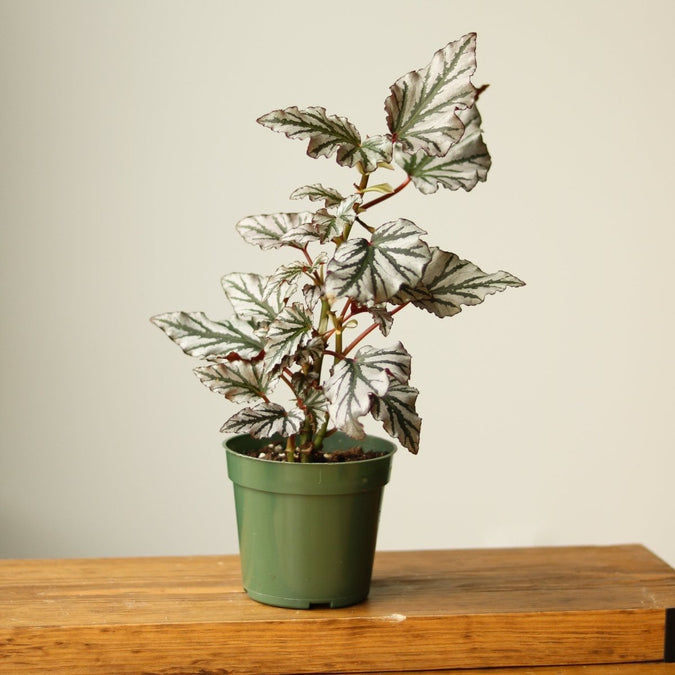
Rex Begonias are primarily grown for their dramatic foliage. Their leaves may be metallic, spiraled, ruffled, or patterned in multiple colors. They can be sensitive to excess moisture and usually perform best with stable conditions and good airflow.
Rhizomatous Begonias
Rhizomatous varieties grow from thick stems that spread along or just below the soil surface. They are known for distinctive leaves and compact growth.
Wax and Fibrous Begonias
Wax Begonias generally have compact growth, glossy foliage, and abundant flowers. They may be grown indoors or outdoors in warm weather and are often used in planters and hanging baskets.
Tuberous Begonias
Tuberous Begonias are prized for their large, colorful flowers. Many experience a seasonal dormancy and have different winter-care requirements than evergreen indoor varieties.
Begonia Light Requirements
Most indoor Begonias grow best in bright, indirect light. An east-facing window is often ideal, while a south- or west-facing window may require a sheer curtain or additional distance from the glass.
Insufficient light can cause:
- Leggy or stretched growth
- Smaller new leaves
- Faded foliage patterns
- Reduced flowering
- Soil that remains wet too long
Too much direct sunlight may cause bleached patches, crispy leaf edges, or brown scorch marks. Move the plant gradually rather than making a sudden change from low light to direct sun.
How to Water Begonias
Begonias generally prefer soil that dries slightly between waterings. They should not remain constantly saturated, but they also may not tolerate severe, prolonged dryness.
Check the soil before watering. For many indoor Begonias, it is appropriate to water when approximately the top inch of soil feels dry. Larger pots and lower-light conditions may require a longer drying period.
Water thoroughly until excess moisture drains from the bottom of the pot. Empty standing water from the saucer or decorative planter afterward.
Signs of Overwatering
- Yellow leaves
- Soft or translucent foliage
- Blackened or collapsing stems
- Musty-smelling soil
- Persistent fungus gnats
- Brown, black, or mushy roots
Signs of Underwatering
- Drooping leaves with dry soil
- Crispy leaf edges
- Dry, lightweight potting mix
- Leaves curling inward
- Flowers dropping prematurely
Drooping does not always mean the plant needs water. Check the soil first, because damaged roots in wet soil can also cause wilting.

Best Soil for Begonias
The best soil for Begonias is loose, airy, and able to drain efficiently while retaining a moderate amount of moisture. Dense, compact soil can exclude oxygen from the roots and increase the risk of rot.
Recommended Begonia Soil Mix
A useful general mixture contains:
- 2 parts indoor potting mix
- 1 part perlite or pumice
- 1 part fine orchid bark
This mixture can be adjusted depending on the variety and your growing conditions. Homes with lower light or frequent watering generally benefit from a more aerated mix.
Perlite helps improve drainage and aeration. Vermiculite retains more moisture and should be used carefully, particularly when the existing mix already stays wet for a long time.
Does a Begonia Need Drainage Holes?
Yes. A pot with at least one unobstructed drainage hole is strongly recommended. If you use a decorative planter without drainage, keep the plant in a removable nursery pot and empty any collected water after watering.
Humidity and Temperature
Many Begonias appreciate moderate humidity, but extremely humid, stagnant conditions can encourage fungal problems. Good airflow is just as important as humidity.
Regular misting is usually unnecessary and can leave moisture sitting on the leaves. This is particularly risky for varieties prone to powdery mildew or leaf spotting. If your home is exceptionally dry, a humidifier is more effective than misting or a pebble tray.
Keep most indoor Begonias in a stable temperature range of approximately 65–80°F. Protect them from:
- Cold drafts
- Air-conditioning vents
- Radiators
- Heating vents
- Frost
- Sudden temperature changes
How to Fertilize Begonias
Feed during periods of active growth using a balanced houseplant fertilizer according to the product instructions. Flowering varieties may benefit from a fertilizer formulated for blooming plants, while foliage varieties can be fed with a general houseplant formula.
Avoid overfertilizing. Excess salts can damage sensitive roots and contribute to brown leaf tips, yellowing, or white buildup on the soil.
Reduce feeding when growth slows significantly. Not every indoor Begonia becomes fully dormant in winter, so base your routine on the plant’s actual growth rather than the calendar alone.
How to Prune Begonias
Remove fully yellow, brown, or damaged foliage with clean scissors. Cane Begonias can be cut back just above a node to encourage branching and a fuller shape.
For flowering varieties, remove spent blooms and their stems as needed. Regular deadheading can keep the plant tidy and may support continued flowering under suitable conditions.
Common Begonia Problems
| Symptom | Likely cause | What to do |
|---|---|---|
| Yellow leaves | Overwatering, poor drainage, or natural aging | Check the soil and roots before watering again |
| Brown crispy edges | Dry soil, direct sun, fertilizer buildup, or environmental stress | Review watering, light, and fertilizer use |
| Drooping | Dry soil, wet damaged roots, or temperature stress | Feel the soil before deciding whether to water |
| Leggy growth | Insufficient light | Move gradually into brighter indirect light |
| White powdery coating | Powdery mildew | Improve airflow, keep foliage dry, and treat appropriately |
| Brown or yellow spots | Fungal or bacterial spotting, sun damage, or physical injury | Isolate the plant and avoid wetting the foliage |
Powdery Mildew on Begonias
Powdery mildew appears as white or gray powdery patches on the leaves and stems. Begonias may be especially vulnerable when air circulation is limited and moisture remains on the foliage.
To reduce the risk:
- Provide space between plants
- Avoid regularly misting the leaves
- Water the soil rather than the foliage
- Remove heavily affected leaves
- Improve airflow around the plant
- Use an appropriate fungicide when necessary
Isolate an affected plant to reduce the chance of the problem spreading to nearby houseplants.
Begonia Pests
Begonias may be affected by mealybugs, spider mites, thrips, whiteflies, scale insects, or fungus gnats. Inspect the undersides of leaves, new growth, stems, and the soil surface regularly.
If pests are found, separate the plant from the rest of your collection and use an appropriate treatment according to its instructions. Repeated applications may be necessary because eggs and immature pests can survive the first treatment.
Repotting Begonias
Begonias often prefer a relatively snug container and do not need to be moved into a much larger pot. Repot when:
- Roots densely circle the container
- Roots emerge from the drainage holes
- The soil has become compacted
- The potting mix no longer drains properly
- The plant dries unusually quickly
Choose a pot approximately one to two inches wider than the existing root ball. Oversized pots hold more soil and may remain wet too long.
How to Propagate Begonias
Propagation methods vary by Begonia type. Cane and fibrous Begonias are commonly propagated from stem cuttings, while many Rex and rhizomatous varieties can also be propagated from leaves or sections of rhizome.
Stem-Cutting Method
- Select a healthy stem with at least one or two nodes.
- Cut below a node using clean scissors.
- Remove the lowest leaves.
- Place the cutting in water or lightly moist potting mix.
- Keep it warm and in bright indirect light.
- Pot the cutting once a healthy root system develops.
Keep propagation media lightly moist rather than saturated. Excess moisture can cause cuttings to rot before roots develop.

Pictured: Rex Begonia
Winter Begonia Care
Indoor Begonias often grow more slowly during winter because of shorter days and cooler conditions. Allow the soil to dry slightly more between waterings and pause or reduce fertilizer when the plant is not actively growing.
Move the plant away from cold windows and drafts while still providing as much bright indirect light as possible.
Some tuberous Begonias naturally enter dormancy and may lose their stems and foliage. This is different from the winter behavior of many cane, Rex, rhizomatous, and fibrous varieties.
Are Begonias Pet-Friendly?
No. Begonias contain insoluble calcium oxalates and should be kept away from cats, dogs, and young children. The underground portions are often considered the most concentrated, but chewing any part of the plant should be discouraged.
A hanging planter or elevated shelf may help keep the foliage away from curious pets, although fallen leaves should also be removed.
Frequently Asked Questions
How often should I water a Begonia?
Water based on the condition of the soil rather than a fixed schedule. For many indoor Begonias, watering is appropriate when the top inch of soil has dried. Pot size, soil, light, temperature, and season will affect how quickly the plant dries.
Do Begonias like humidity?
Many Begonias appreciate moderate humidity, but they also need good airflow. Extremely humid, stagnant conditions or constantly wet foliage can encourage fungal problems.
Should I mist my Begonia?
Regular misting is usually unnecessary and may increase the risk of leaf spotting or powdery mildew. A humidifier is more effective when the air is exceptionally dry.
Can Begonias grow in low light?
Begonias may tolerate medium light, but very low light can cause leggy growth, muted colors, slower drying, and reduced flowering. Bright indirect light generally produces better results.
Why is my Begonia dropping leaves?
Leaf drop may occur after overwatering, underwatering, cold exposure, shipping, repotting, or relocation. Check the soil and environment before making multiple changes at once.
Why is my Begonia not flowering?
Flowering Begonias may produce fewer blooms when they receive insufficient light, excessive fertilizer, inconsistent watering, or limited nutrients. Seasonal slowing and plant maturity can also affect flowering.
Keep Your Begonia Thriving
The key to healthy Begonia growth is balance. Provide bright indirect light, allow the soil to dry slightly between waterings, use a loose potting mix, and maintain airflow around the foliage.
When a problem develops, check the soil and roots before automatically adding water or fertilizer. Making one careful adjustment at a time will help you identify the cause without placing the plant under additional stress.
Explore Begonia Plants
Browse colorful foliage varieties, flowering Begonias, and unusual collector favorites available from Ed’s Plant Shop.
Shop Begonia Plants →


