
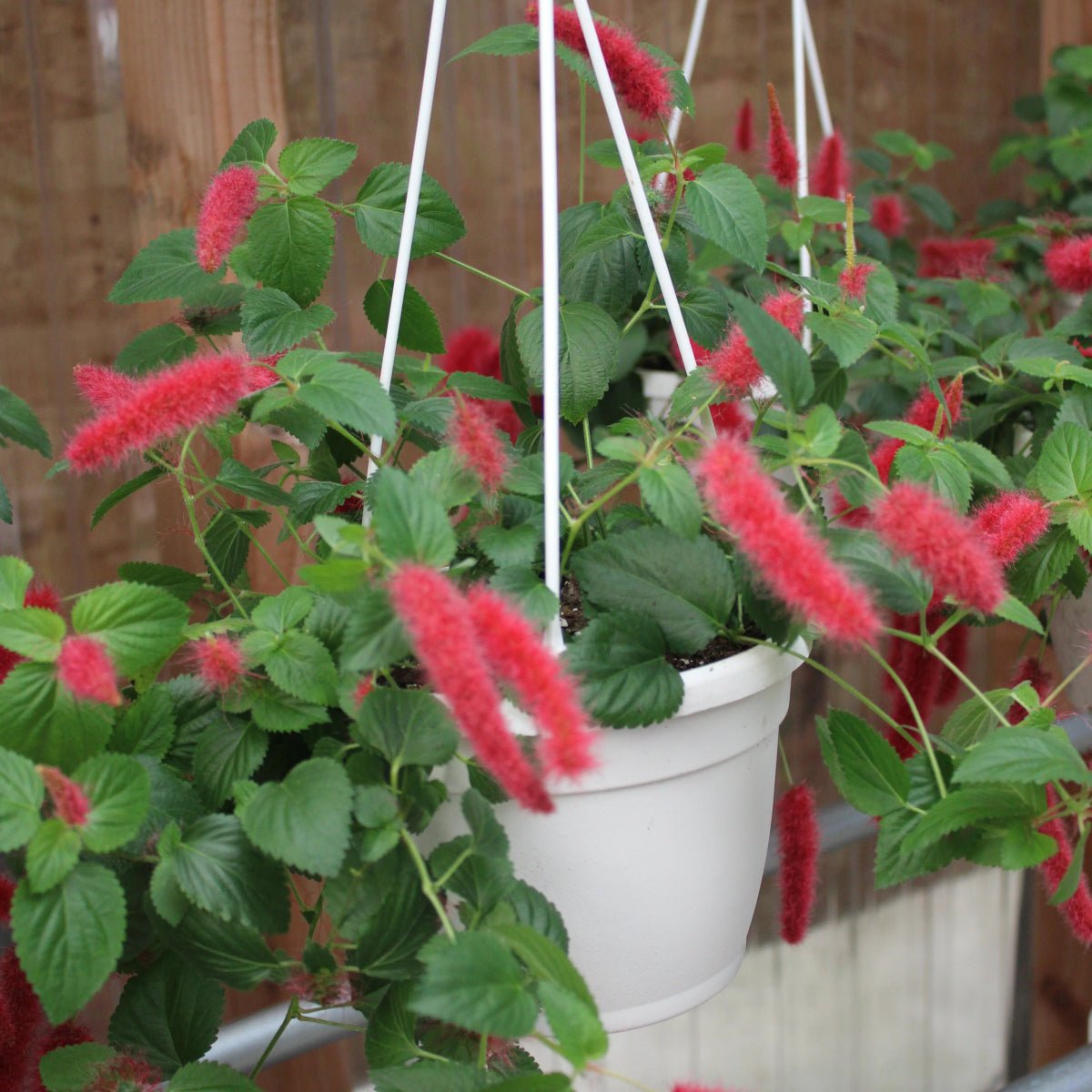
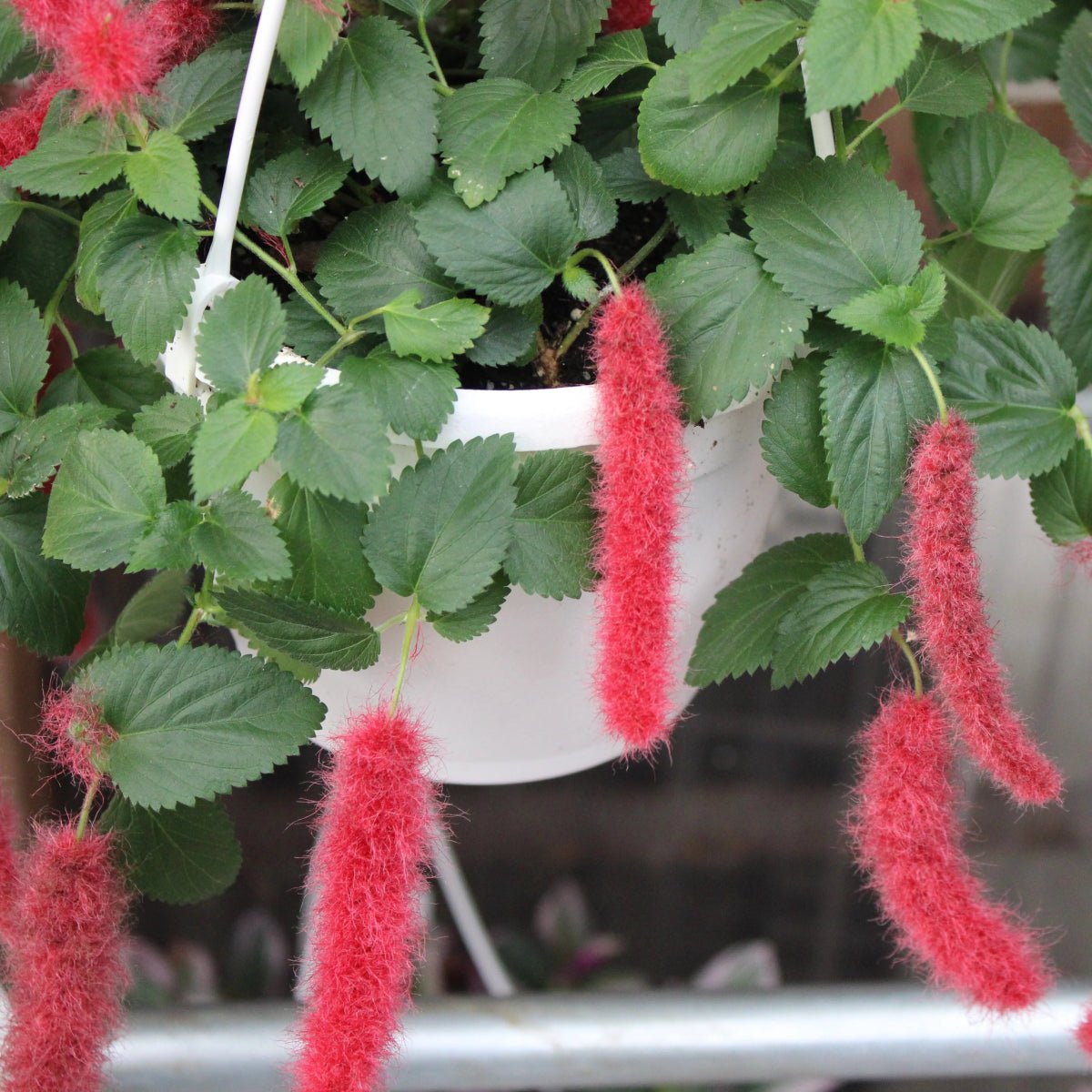
The Chenille Plant (Acalypha hispida) produces something you won’t find on most houseplants: long, pendulous flower spikes that look and feel like velvet rope — deep red, fuzzy, and up to 18 inches long in a healthy specimen. They cascade from the basket in clusters, blooming nearly year-round with enough light. The name comes from the French word for “caterpillar,” which is exactly what the blooms resemble up close.
It’s a fast grower, a prolific bloomer, and one of the most visually distinctive hanging basket plants available. It does require more attention than a pothos — it wants consistent moisture, high humidity, and bright light — but rewards that care with a display that stops people mid-sentence.
Toxicity note: Toxic to cats, dogs, and humans if ingested. Keep out of reach of pets and children.
What Makes This Plant Special
- Extraordinary blooms: Velvety red cattail-like flower spikes up to 18″ long, cascading from trailing stems. No other common hanging basket plant looks like this.
- Year-round flowering: With adequate bright light, blooms continuously rather than seasonally.
- Fast-growing: Trailing stems extend quickly during the growing season, filling out a basket dramatically.
- Bold tropical presence: Works equally well indoors near a bright window or outdoors on a covered porch in warm weather.
Ed’s Plant Profile
- Botanical Name: Acalypha hispida
- Common Names: Chenille Plant, Red-Hot Cattail, Foxtail Plant, Monkey Tail
- Family: Euphorbiaceae (same family as poinsettias and crotons)
- Native Range: Malaysia and the South Pacific
- Growth Habit: Trailing; stems can reach several feet in a hanging basket
- Toxicity: Toxic to cats, dogs, and humans if ingested
Care Guide
- Light: Bright indirect light to full sun. This is non-negotiable for blooming — insufficient light means fewer or no flowers. A south or west-facing window is ideal indoors. Can handle some direct morning sun.
- Water: Keep soil consistently moist but not waterlogged. Unlike succulents, this plant does not tolerate drying out completely — wilting is a sign it needs water immediately. Water thoroughly and drain well.
- Soil: Rich, well-draining potting mix. A mix with added compost or worm castings supports heavy blooming.
- Humidity: High humidity is important — ideally 60%+. A humidifier nearby or regular misting helps, especially in dry indoor environments in winter.
- Temperature: 65–80°F. Tropical by nature — protect from temperatures below 55°F and cold drafts.
- Fertilizer: Every two weeks in spring and summer with a balanced liquid fertilizer. A bloom-boosting fertilizer (higher phosphorus) can intensify flower production. Reduce to monthly in fall and winter.
- Pruning: Trim spent flower spikes and leggy stems regularly to encourage bushy, full growth and continuous blooming. Don’t be shy — it responds well to hard pruning.
- Propagation: Stem cuttings in spring or early summer root readily in water or moist soil.
- Pests: Watch for spider mites, whiteflies, and aphids — especially in dry conditions. Treat early with insecticidal soap or neem oil.
Troubleshooting
- No flowers or sparse blooming: Almost always a light issue. Move to the brightest spot available. Also check fertilizer — a phosphorus-rich feed encourages blooming.
- Wilting leaves: Underwatering. Water immediately and thoroughly — this plant doesn’t bounce back as quickly as succulents but will recover.
- Yellowing leaves: Overwatering or poor drainage. Check that the basket drains freely after watering.
- Leggy stems with few leaves: Needs more light and a hard prune. Cut back by one-third to encourage dense regrowth.
- Brown leaf tips: Low humidity. Increase misting frequency or add a humidifier.
Fun Fact
The Chenille Plant is part of the Euphorbiaceae family — the same family as poinsettias, crotons, and rubber trees. In warm climates (USDA zones 10–12), it grows as a shrub reaching 6 feet tall. Indoors in a hanging basket, those same trailing tendencies create the cascading waterfall effect it’s known for.
Reviews
There are no reviews yet.