

Peperomia Care Guide: Light, Water, Soil and Common Problems
Peperomia plants are compact, colorful, and generally easy to maintain, making them excellent houseplants for beginners and experienced collectors alike. Their thick leaves, varied textures, and manageable growth habits make them well suited to windowsills, desks, shelves, and smaller apartments.
Successful Peperomia care begins with three essentials: bright indirect light, careful watering, and loose, well-draining soil. Peperomia roots are relatively fine and sensitive to excess moisture, so choosing the right potting mix is especially important.
Our practical Peperomia watering test
We do not recommend watering Peperomia on a fixed weekday. Lift the pot when the mix is freshly watered, then lift it again as it dries; the change in weight is more useful than the calendar. Check moisture below the surface with a finger or wooden skewer, especially in a decorative pot. Because Peperomia roots are fine, an oversized container can stay wet long after the top looks dry. When in doubt, wait and check again rather than adding a small splash of water.
Quick Peperomia Care Guide
Light: Bright, indirect light
Water: Allow the upper portion of the soil to dry before watering
Soil: Loose, airy, and fast-draining
Temperature: Approximately 65–80°F
Humidity: Average household humidity is usually sufficient
Pet safety: Peperomia is generally considered pet-friendly

What Is a Peperomia Plant?
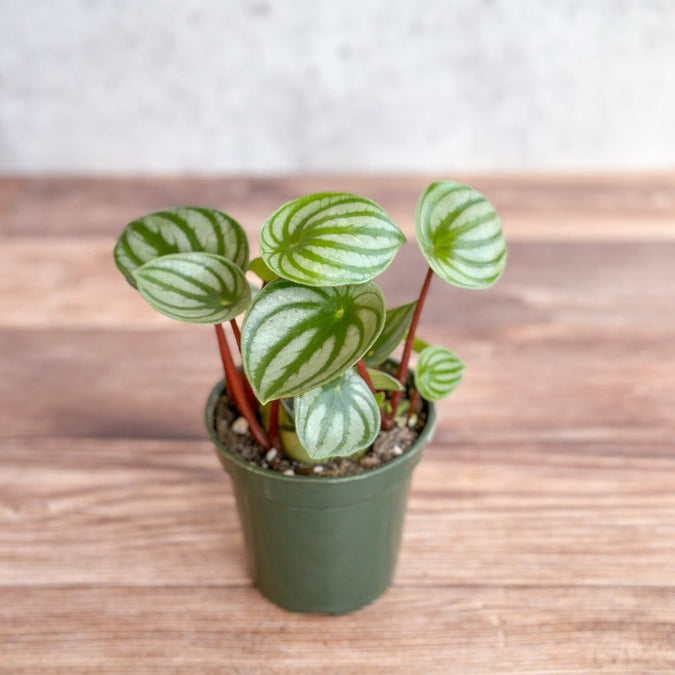
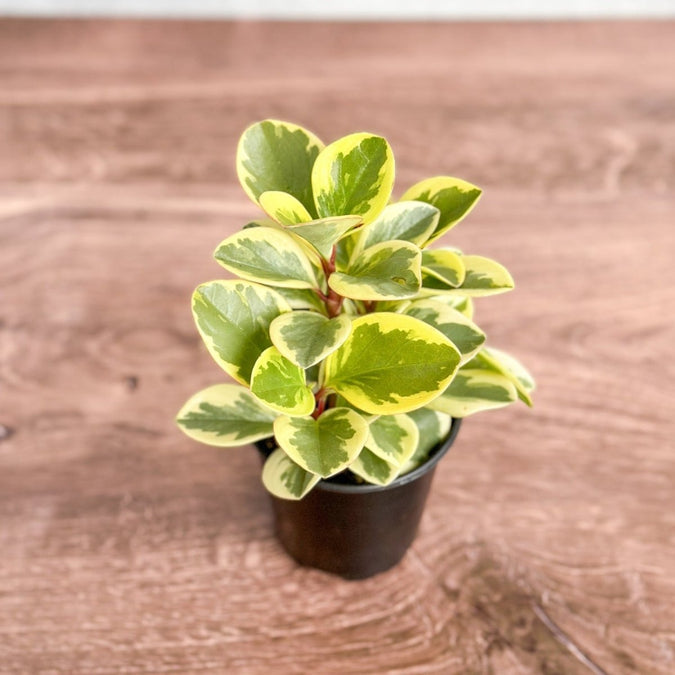
Peperomia is a diverse genus containing many tropical and subtropical plants. Some varieties grow upright, while others trail over the edges of pots and hanging baskets. Their foliage may be glossy, rippled, striped, silver, red, green, or variegated.
Popular varieties include:
- Peperomia obtusifolia, commonly called Baby Rubber Plant
- Watermelon Peperomia
- Peperomia 'Ruby Cascade'
- Peperomia 'Rosso'
- Peperomia 'Hope'
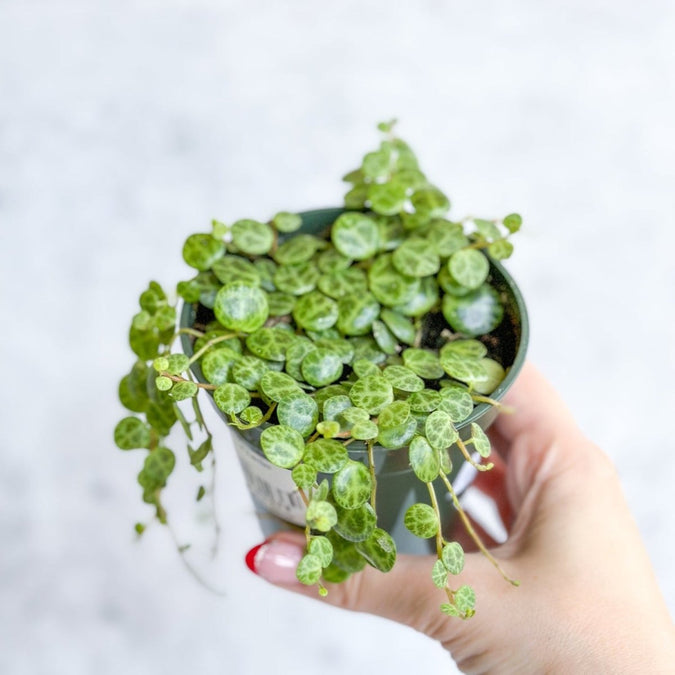
- Peperomia 'String of Turtles'
Although individual varieties differ slightly, most Peperomia plants prefer similar indoor growing conditions.
Best Soil for Peperomia
The best soil for Peperomia is loose, airy, and able to drain quickly while retaining a small amount of moisture. Peperomia roots are relatively delicate and can deteriorate when they remain in dense, saturated soil for too long.
A standard indoor potting mix may retain too much moisture when used by itself, especially in a large pot or a home with limited light. Improving the mix with coarse, airy materials helps oxygen reach the roots and allows excess water to drain more efficiently.
Recommended Peperomia Soil Mix
- 2 parts indoor potting mix
- 1 part perlite or pumice
- 1 part fine orchid bark
For a ready-made option, consider the Houseplant Chunky Mix by Sol Soils.
Can You Use Cactus Soil for Peperomia?
Cactus or succulent soil can work for Peperomia, but some commercial cactus mixes dry too quickly or contain very fine sand that compacts over time. For better results, combine cactus soil with a small amount of regular indoor potting mix or fine orchid bark.
Can You Use Regular Potting Soil?
Regular indoor potting soil can be used as a base, but it is often better to amend it with perlite, pumice, or orchid bark. This is particularly important if your home receives limited natural light, you tend to water frequently, or the pot is large relative to the root system.
Signs That Peperomia Soil Is Too Dense
- The soil remains wet for a long time after watering
- Leaves become soft, yellow, or translucent
- Stems begin to darken near the soil
- The plant develops a musty smell
- Roots appear brown, black, or mushy
- Fungus gnats repeatedly appear around the pot
Does Peperomia Need Drainage Holes?
Yes. A pot with at least one unobstructed drainage hole is strongly recommended. If you use a decorative planter without drainage, keep the Peperomia in a removable nursery pot and empty any collected water after watering.
Peperomia Light Requirements
Most Peperomia plants grow best in bright, indirect light. An east-facing window is often ideal, although the plant may also perform well near a filtered south- or west-facing window.
Signs that a Peperomia needs more light include long spaces between leaves, stems leaning strongly toward a window, smaller new leaves, faded variegation, and soil staying wet unusually long.
Avoid exposing the plant to prolonged, intense afternoon sunlight. Too much direct sun can bleach or scorch the leaves. If your space lacks natural light, a grow light can make a significant difference.
How to Water Peperomia
Peperomia plants prefer to dry partially between waterings. Their thick leaves can store some moisture, making them more tolerant of short dry periods than consistently wet soil.
Before watering, check the soil with your finger or a wooden skewer. For many Peperomia varieties, it is appropriate to water when approximately the upper one-third to one-half of the potting mix has dried. Water thoroughly until excess moisture drains from the bottom of the container. Empty the saucer or decorative pot afterward.
Signs of Overwatering
- Yellow leaves
- Soft or translucent foliage
- Blackened stems
- Wet soil that does not dry
- Sudden leaf drop
- Mushy or dark roots
Signs of Underwatering
- Wrinkled or curling leaves
- Dry, lightweight soil
- Drooping stems
- Crispy leaf edges
- Leaves that feel thinner or less firm than usual
Humidity and Temperature
Most Peperomia plants perform well in average household humidity. Keep Peperomia in a stable indoor temperature range of approximately 65–80°F. Protect the plant from cold drafts, air-conditioning vents, radiators, and sudden temperature changes. If your home is exceptionally dry, a humidifier is more effective than misting.
How to Fertilize Peperomia
Peperomia is not a heavy feeder. Apply a balanced liquid houseplant fertilizer during periods of active growth, generally in spring and summer. A product such as Arber Plant Food Concentrate may be used according to its label directions. Reduce or pause fertilization when growth slows significantly.

Repotting Peperomia
Peperomia plants have relatively small root systems and do not need frequent repotting. Repot when roots densely circle the inside of the container, emerge from drainage holes, or the soil has become compacted. Choose a new pot approximately one to two inches wider than the existing root ball.
How to Propagate Peperomia
Many Peperomia varieties can be propagated from stem cuttings, and some can also be propagated from leaf cuttings.
Stem-Cutting Method
- Select a healthy stem with at least two or three leaves.
- Cut just below a node using clean scissors.
- Remove the lowest leaf if necessary.
- Place the cutting in water or lightly moist potting mix.
- Keep it in warm, bright indirect light.
- Pot the cutting once it has developed a healthy root system.
Long-fiber sphagnum moss can also be used for propagation, but it should remain lightly moist rather than waterlogged.
Common Peperomia Problems
Why Is My Peperomia Drooping?
Drooping may be caused by underwatering, overwatering, root damage, cold temperatures, or a sudden environmental change. Check the soil before watering.
Why Are My Peperomia Leaves Turning Yellow?
Yellow Peperomia leaves are commonly associated with excess moisture, poor drainage, dense soil, or root rot. An occasional older yellow leaf may be normal, but rapid or widespread yellowing should be investigated.
Why Is My Peperomia Growing Leggy?
Long stems and wide spaces between leaves usually indicate insufficient light. Move the plant gradually into brighter indirect light or supplement with a grow light.
Why Are the Leaves Curling?
Curling may result from dry soil, root problems, excessive light, temperature stress, or pests. Inspect the soil, roots, and undersides of the leaves before changing the plant's care routine.
Why Are the Leaves Falling Off?
Leaf drop may occur after overwatering, underwatering, cold exposure, repotting, shipping, or relocation. Continued leaf loss suggests the plant remains under stress.
Trailing Peperomia Varieties
Popular trailing varieties include Peperomia 'Ruby Cascade', Peperomia 'String of Turtles', Peperomia 'Hope', Peperomia rotundifolia, and Peperomia scandens.

Frequently Asked Questions
What is the best soil for Peperomia?
The best Peperomia soil is loose, airy, and fast-draining. A useful mixture is two parts indoor potting soil, one part perlite or pumice, and one part fine orchid bark.
Does Peperomia like succulent soil?
Peperomia can grow in succulent soil, but some mixes may dry too quickly. Adding a small amount of regular potting soil or fine orchid bark creates a more balanced mixture.
Does Peperomia like to be root-bound?
Peperomia can tolerate a relatively snug pot, but it does not need to become severely root-bound. Repot when the roots become crowded or the potting mix no longer functions properly.
How often should Peperomia be watered?
Water when the upper portion of the soil has dried, then allow excess water to drain fully. The frequency will vary with light, temperature, pot size, soil, and season.
Can Peperomia grow in low light?
Some Peperomia varieties can tolerate medium or lower light, but growth will usually be slower. Bright indirect light generally produces denser growth and stronger coloration.
Is Peperomia pet-friendly?
Peperomia is commonly grown as a pet-friendly houseplant. However, it is still best to prevent pets from chewing on any indoor plant.
Keep Your Peperomia Healthy
Healthy Peperomia growth depends on balance. Provide bright indirect light, allow the soil to dry partially between waterings, and use a loose potting mix that gives the roots access to oxygen. Most Peperomia problems can be prevented by avoiding oversized pots and consistently wet soil.
Explore Peperomia Plants
Browse upright, variegated, colorful, and trailing Peperomia varieties available from Ed's Plant Shop.
🌿 In NYC? We Deliver Locally
We personally prepare and hand-deliver plants to eligible New York City addresses — fresher plants, fewer transit risks.
About Ed's Plant Shop
Ed's Plant Shop is a Brooklyn-rooted independent online plant shop offering houseplants, plant-care supplies, local delivery in eligible areas of New York City, and nationwide shipping. Our care guides are created to help plant owners understand their plants and make practical, informed care decisions at home.
Know a fellow plant lover?


