
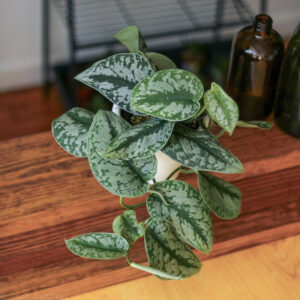
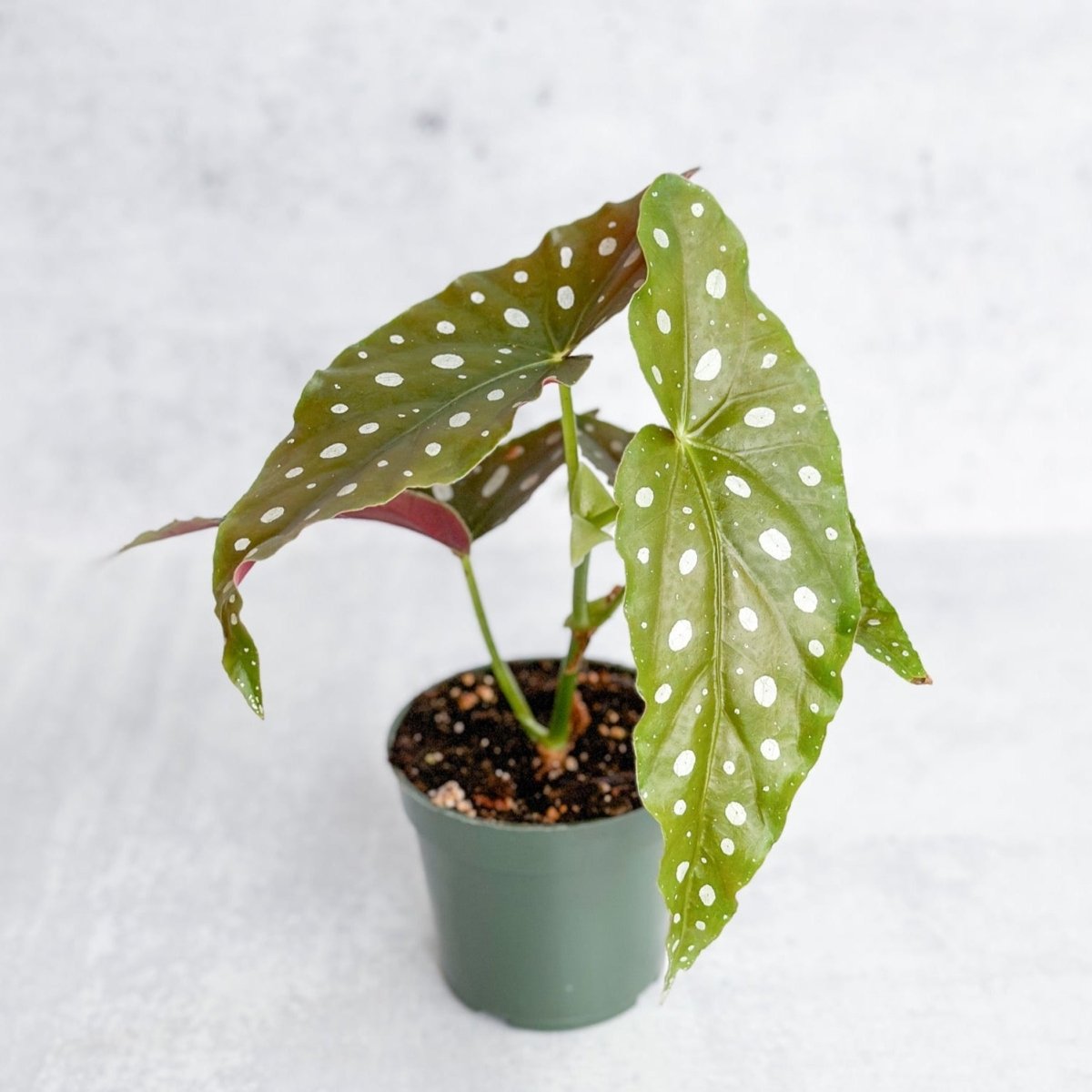
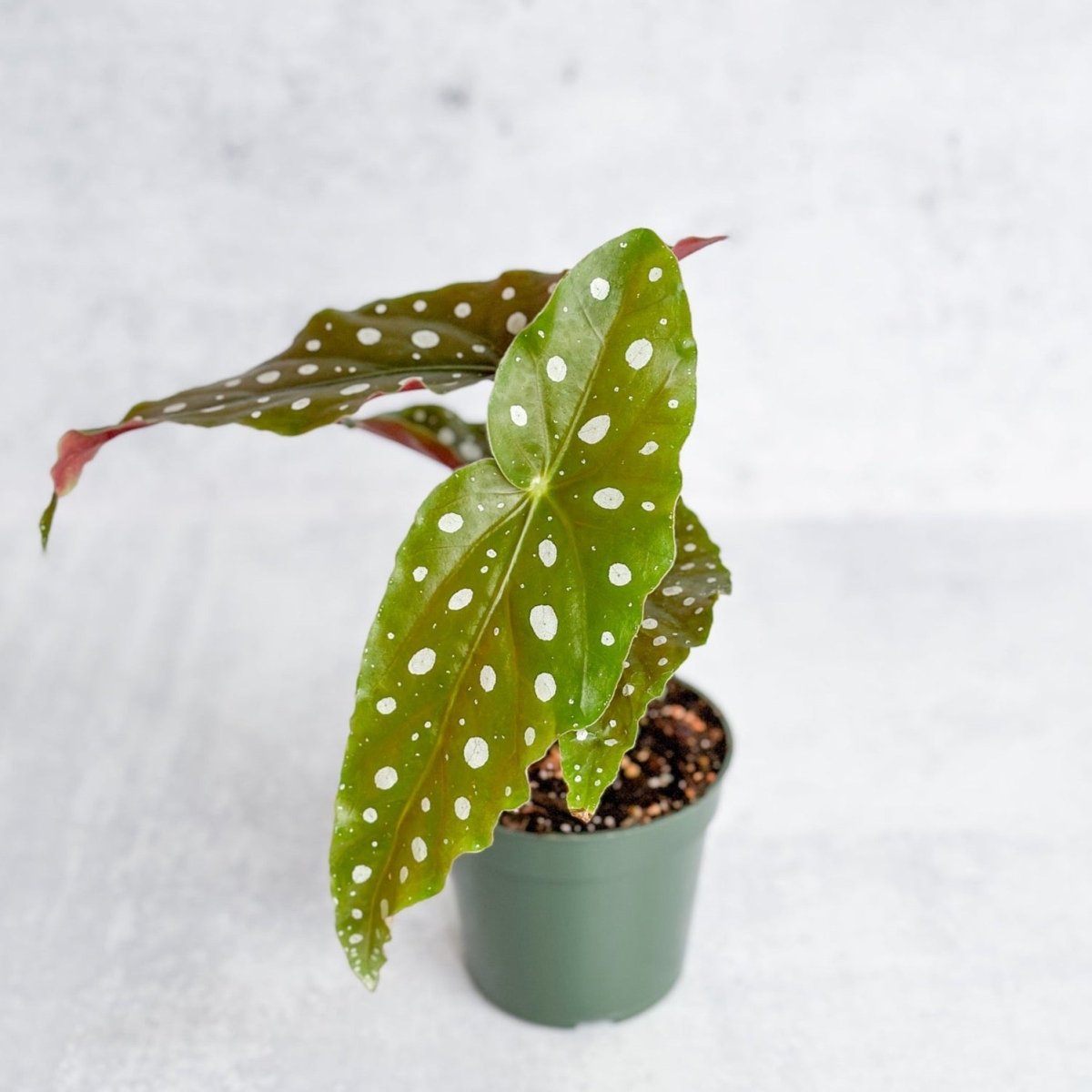
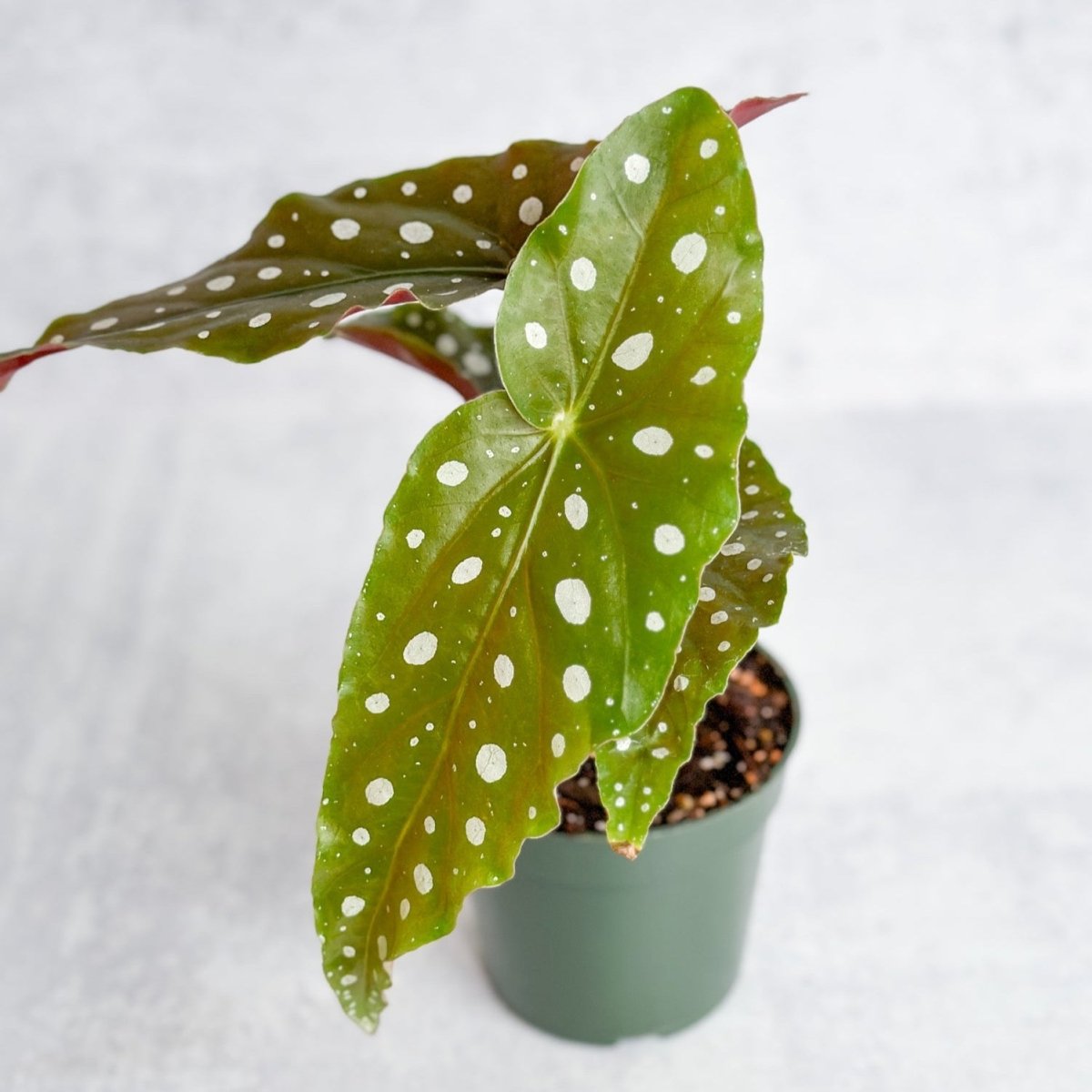
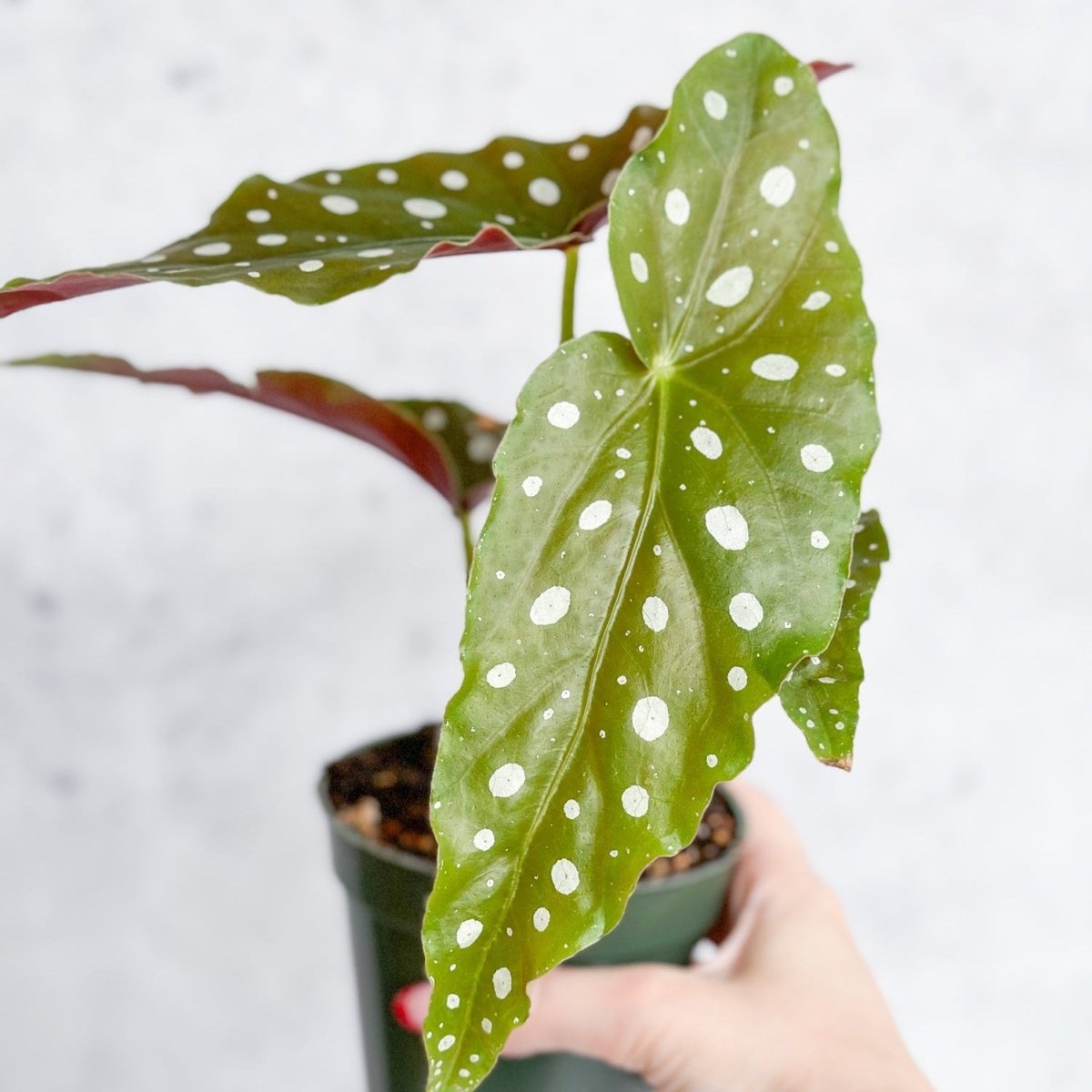
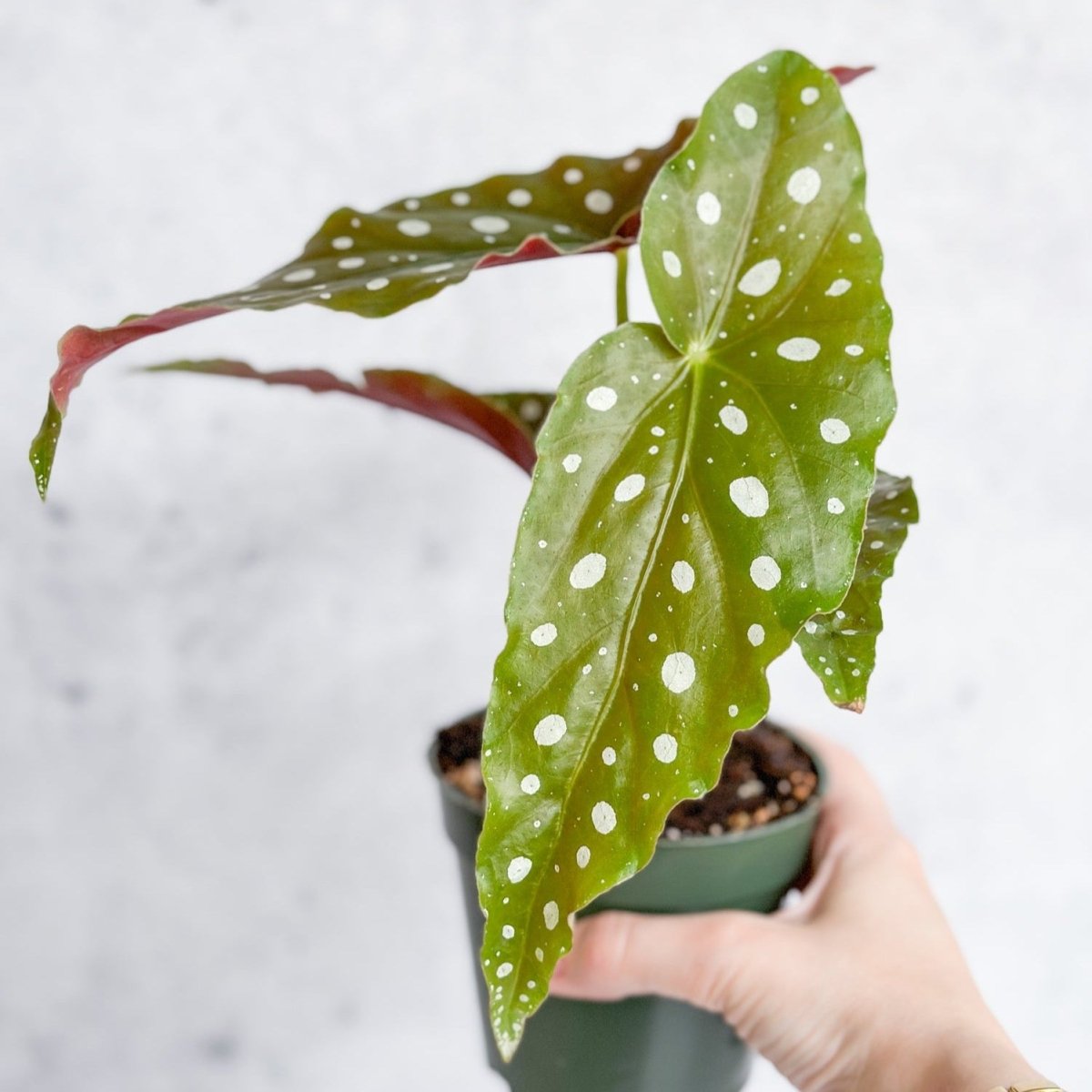
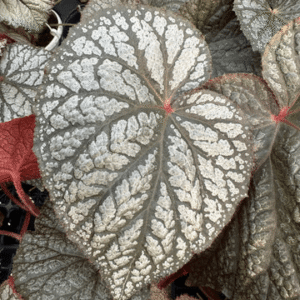
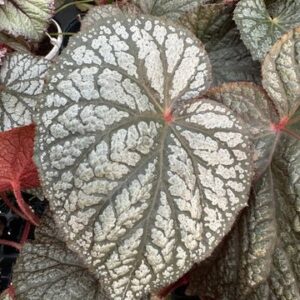
The Polka Dot Begonia (Begonia maculata ‘Wightii’) is one of the most visually dramatic houseplants available. Its large, asymmetric angel wing leaves are deep olive-green on top, splashed with metallic silver spots that catch light like sequins, and rich burgundy-red on the undersides. It’s a collector’s plant that looks like it belongs in a greenhouse — but it grows happily on a bright windowsill.
It does require more attention than a pothos — it wants consistent moisture, high humidity, and bright indirect light — but rewards that care with rapid growth and, in the right conditions, clusters of delicate white flowers on arching stems.
Toxicity note: Toxic to cats, dogs, and humans if ingested. Keep out of reach of pets and children.
What Makes This Plant Special
- Extraordinary foliage: Silver polka dots on deep green angel wing leaves with burgundy undersides — one of the most distinctive leaf patterns in the houseplant world.
- Flowers too: Produces clusters of delicate white flowers on arching stems when conditions are right.
- Fast grower: With adequate light and humidity, grows rapidly and becomes a statement piece quickly.
- Collector status: A staple of serious plant collections — the silver spots are caused by air pockets between leaf layers, an adaptation to maximize light absorption in the rainforest understory.
Ed’s Plant Profile
- Botanical Name: Begonia maculata ‘Wightii’
- Common Names: Polka Dot Begonia, Angel Wing Begonia, Begonia Wightii
- Family: Begoniaceae
- Native Range: Tropical rainforests of Brazil
- Growth Habit: Upright; leaves extend to approximately 8″ in length
- Toxicity: Toxic to cats, dogs, and humans if ingested
Care Guide
- Light: Medium to bright indirect light. More light = faster growth and more vivid coloration. Avoid direct sun which scorches the leaves. An east or west-facing window is ideal.
- Water: Keep soil consistently moist but not waterlogged. Water more frequently in spring and summer. Never let it dry out completely — wilting causes leaf drop. Avoid getting water on the leaves.
- Soil: Well-draining, slightly acidic mix. A peat or coco coir-based mix with added perlite works well.
- Humidity: High humidity (60%+) is important. A humidifier nearby is strongly recommended — brown leaf edges are usually a humidity issue.
- Temperature: 67–85°F. Keep away from cold drafts and temperatures below 60°F.
- Fertilizer: Every two weeks in spring and summer with a diluted balanced liquid fertilizer. Reduce in fall and winter.
- Pruning: Pinch back leggy stems to encourage bushier growth. Remove brown or dead leaves at the base.
- Propagation: Stem cuttings root easily in water or moist soil within 2–3 weeks.
- Pests: Watch for mealybugs and whiteflies. The dense foliage can hide early infestations — inspect regularly.
Troubleshooting
- Brown leaf edges: Low humidity. Increase ambient humidity with a humidifier — misting is not sufficient for this plant.
- Leaf drop: Usually underwatering or cold stress. Keep soil consistently moist and away from drafts.
- Yellowing leaves: Overwatering or insufficient light. Check soil moisture and move to a brighter spot.
- Leggy, sparse growth: Needs more light. Move closer to a window and pinch back stems to encourage branching.
- No flowers: Needs bright light and consistent care. A south or east-facing window in spring usually triggers blooming.
Read our Advanced Begonia Care Guide for expert tips on keeping your Begonias thriving year-round.
Reviews
There are no reviews yet.