
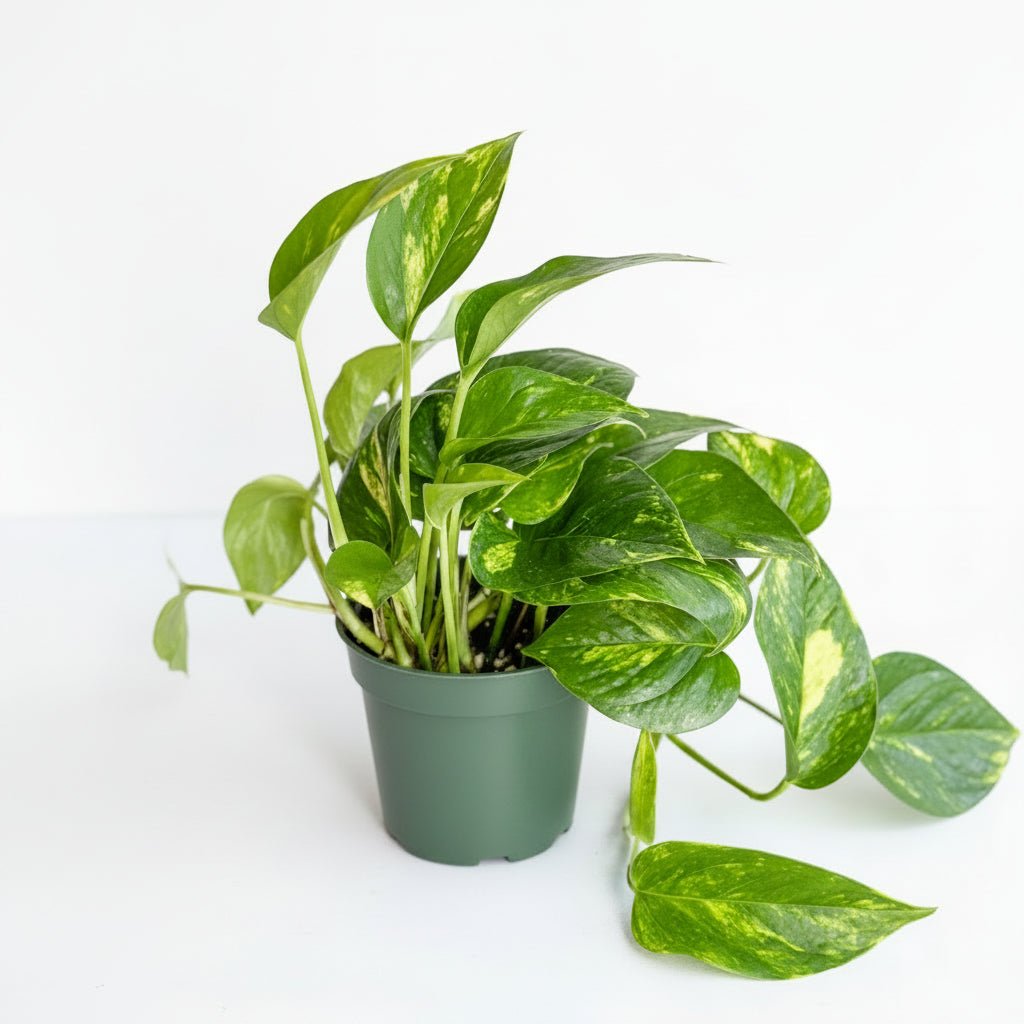
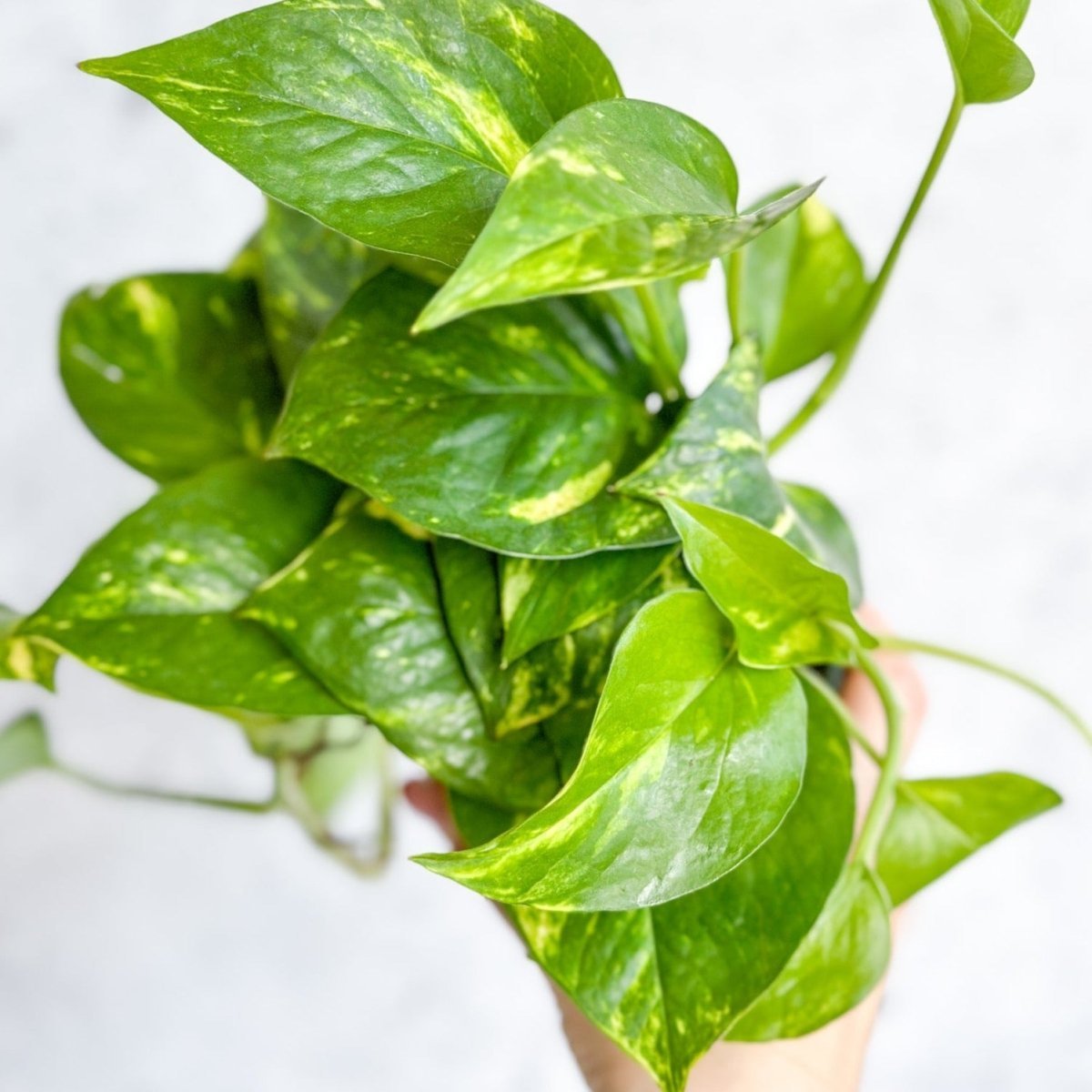
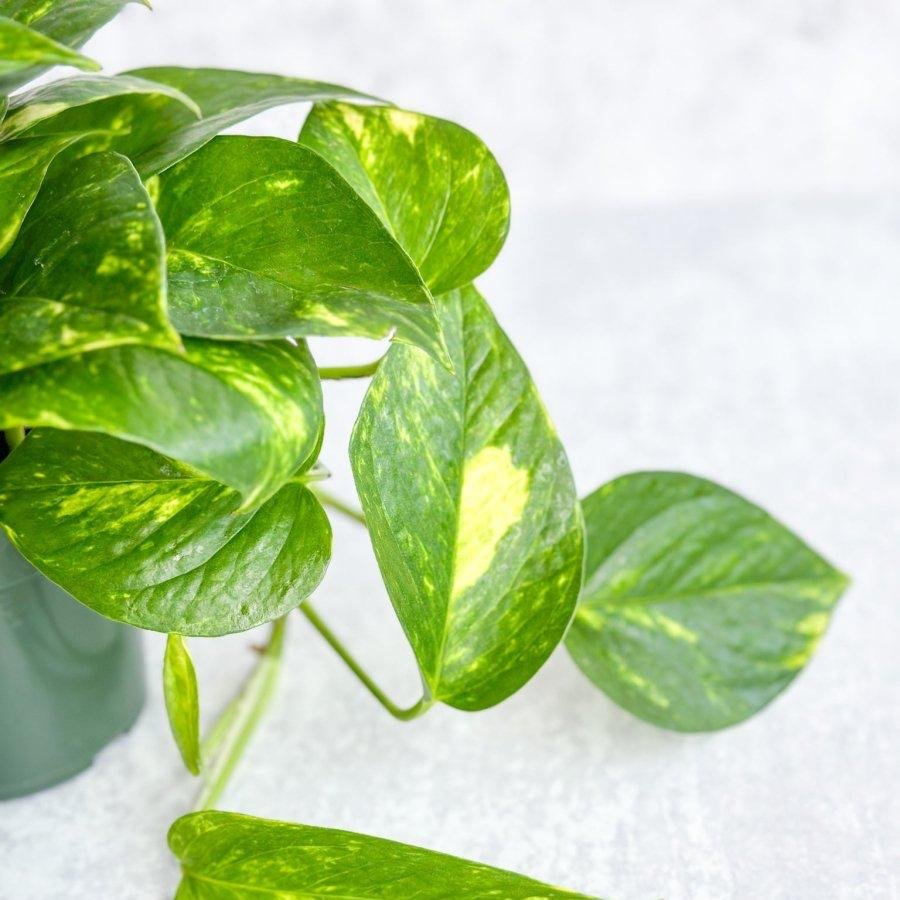
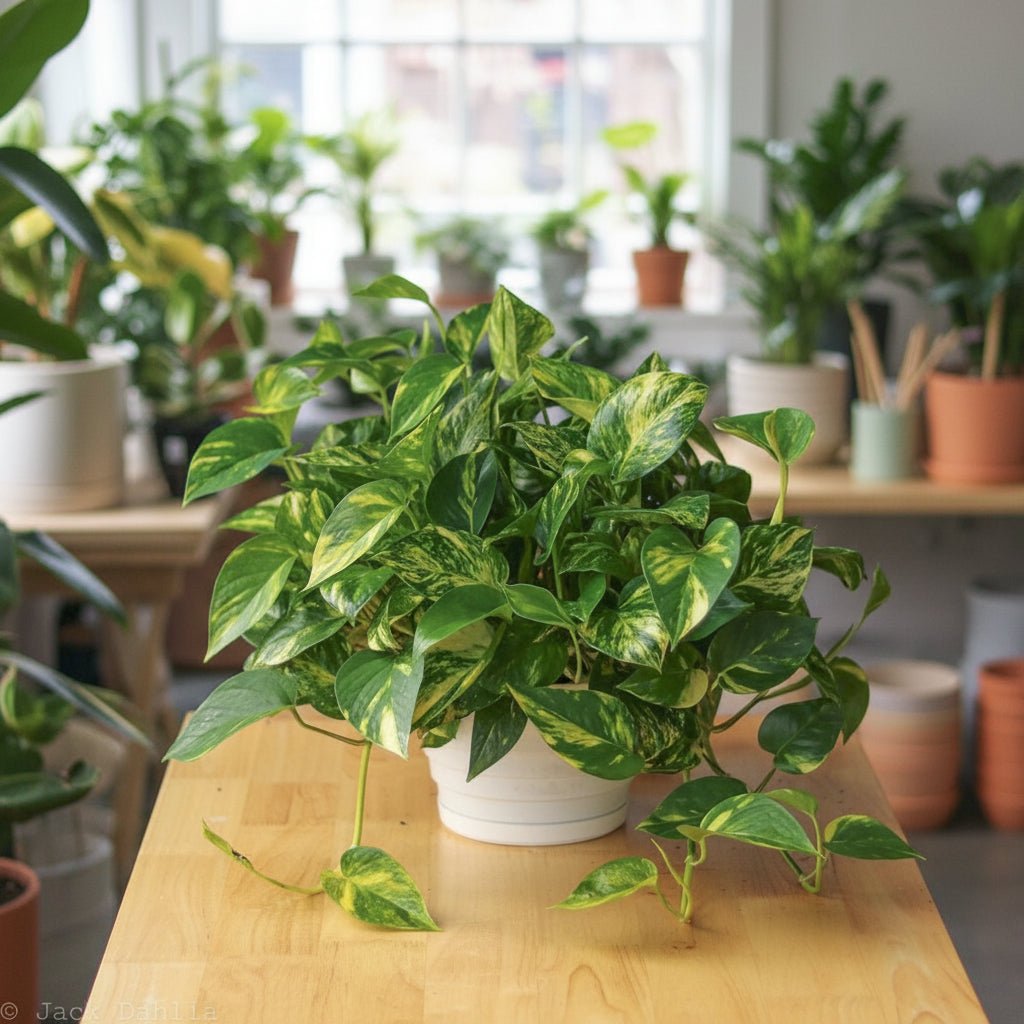
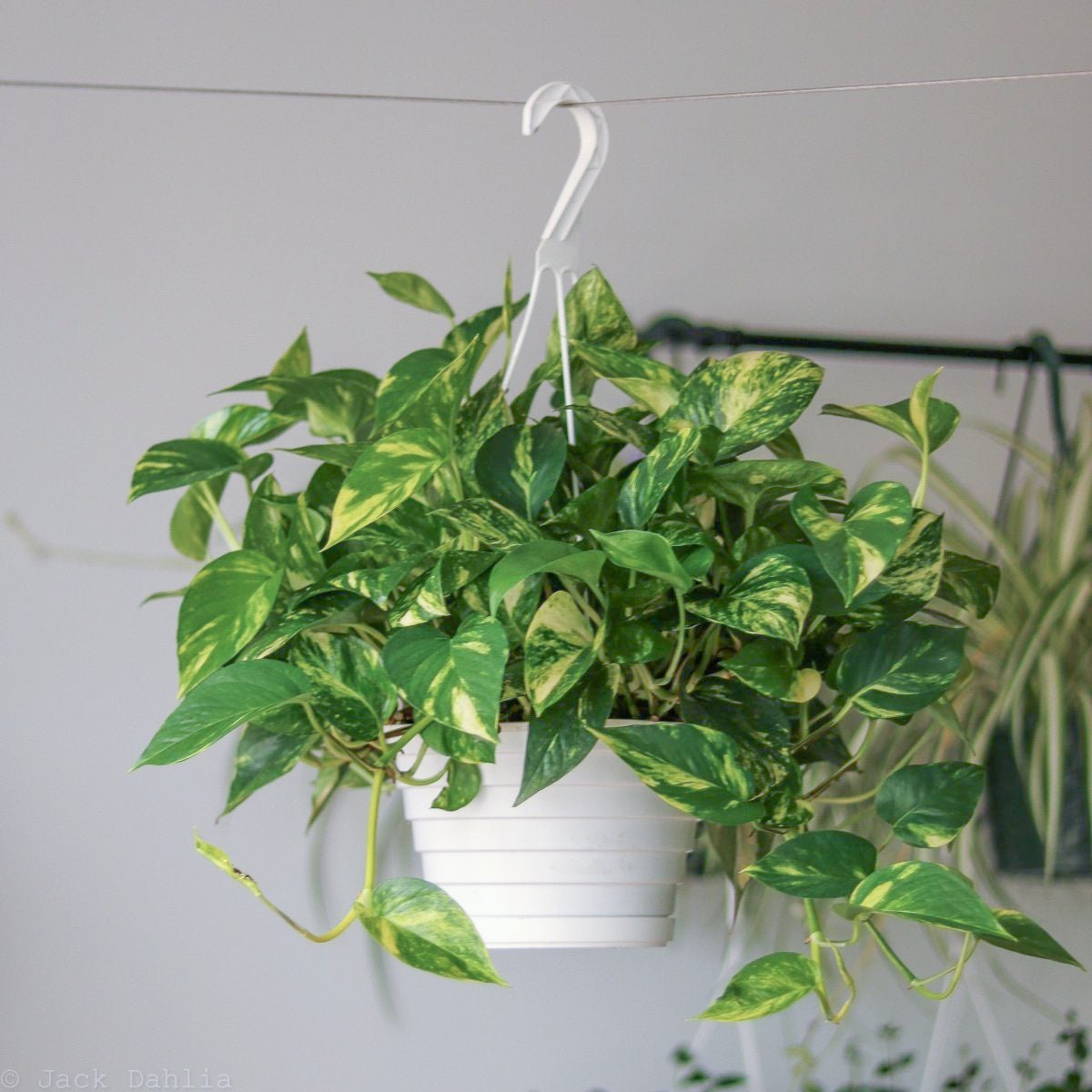
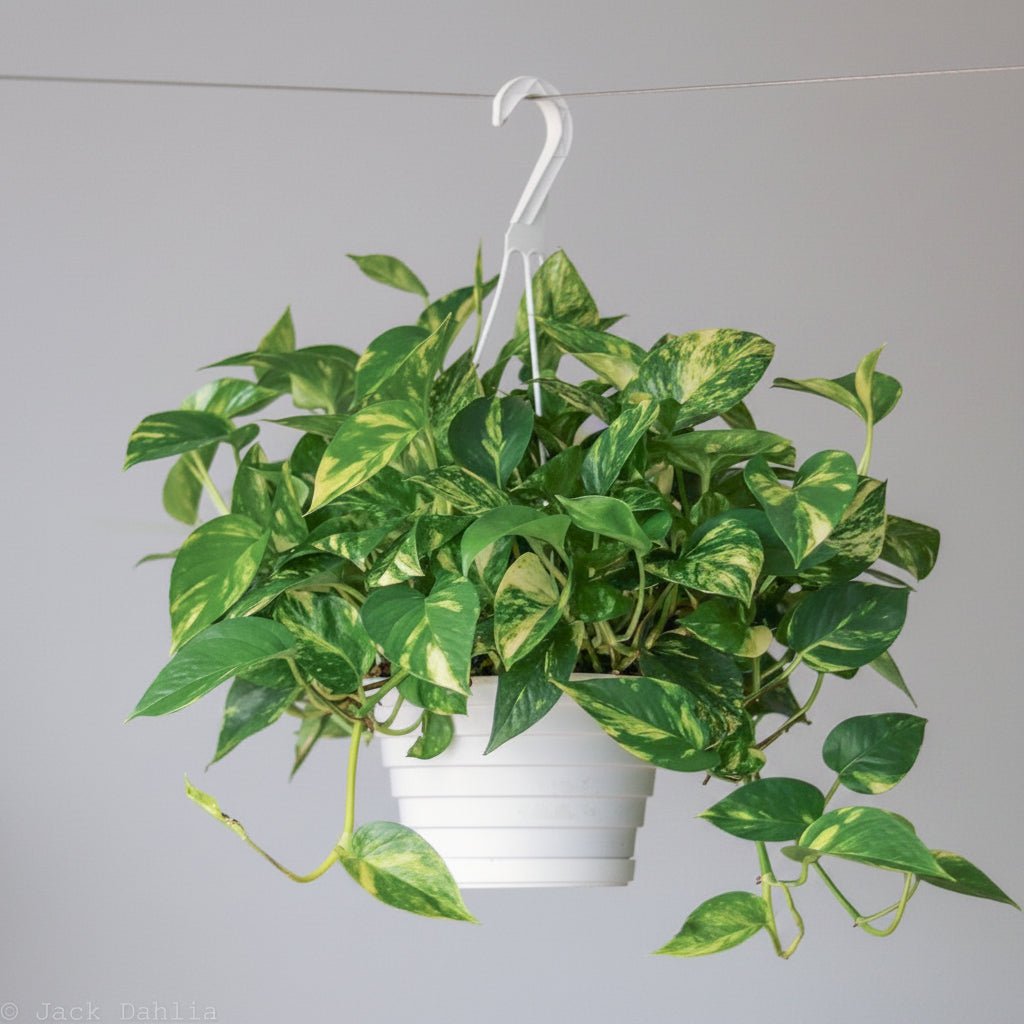
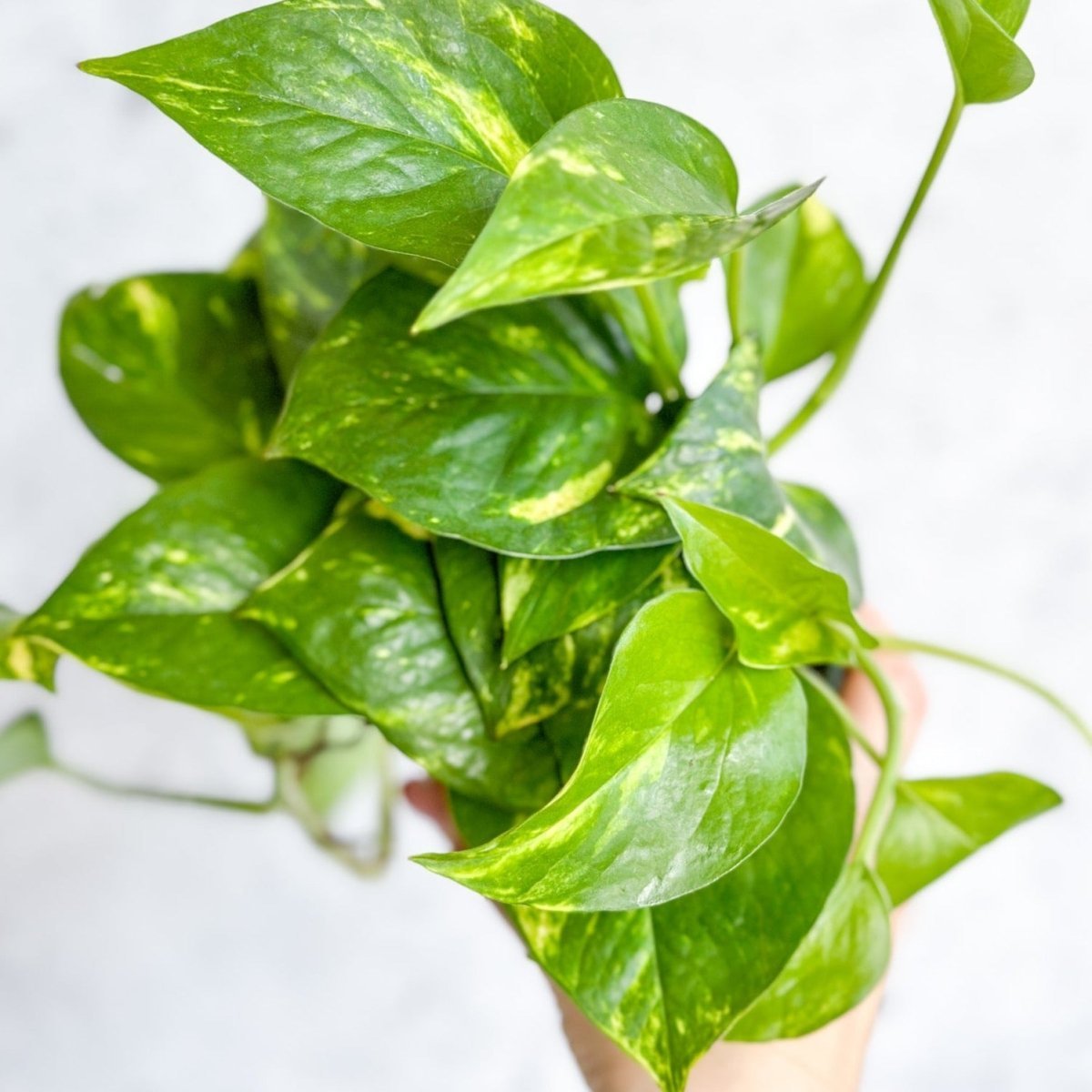
The Golden Pothos (Epipremnum aureum) is the plant that earns its reputation. Heart-shaped leaves splashed with golden-yellow variegation on fast-trailing vines — it grows visibly week to week, tolerates a wide range of light conditions, bounces back from missed waterings, and looks good doing all of it. It’s the plant most experienced growers started with, and for good reason.
In bright indirect light, the golden variegation is vivid and the vines grow aggressively. In lower light, growth slows and the leaves may revert toward solid green — still attractive, just less variegated. It can trail from a hanging basket, cascade off a shelf, or climb a moss pole as it matures.
Toxicity note: Toxic to cats, dogs, and humans if ingested. Keep out of reach of pets and children.
What Makes This Plant Special
- Genuinely adaptable: Tolerates low light, irregular watering, and imperfect conditions better than almost any other houseplant.
- Fast grower: Can extend 12–18″ per month under ideal conditions — one of the fastest-trailing houseplants available.
- Multiple display options: Hang it, trail it off a shelf, or train it up a moss pole. The same plant works in all three formats.
- Easy to propagate: Stem cuttings root in water within 2–4 weeks — one plant becomes many.
- Five sizes available: From a compact 4″ starter to an 8″ hanging basket ready to make a statement.
Ed’s Plant Profile
- Botanical Name: Epipremnum aureum
- Common Names: Golden Pothos, Devil’s Ivy, Money Plant, Ceylon Creeper
- Family: Araceae
- Native Range: Tropical forests of Southeast Asia
- Growth Habit: Fast-growing trailing vine; can also climb with support
- Toxicity: Toxic to cats, dogs, and humans if ingested
Care Guide
- Light: Bright indirect light produces the most vivid golden variegation and fastest growth. Tolerates low light but leaves may revert to solid green and growth slows significantly. Avoid prolonged direct sun which bleaches the leaves.
- Water: Allow the top 1–2″ of soil to dry before watering. Water thoroughly, then drain completely. Tolerates some drought but not prolonged dryness. Yellow leaves are usually the first sign of overwatering.
- Soil: Well-draining indoor potting mix. Adding perlite improves drainage and reduces overwatering risk.
- Humidity: Average household humidity (40–60%) is fine. No misting required.
- Temperature: 65–85°F. Keep away from cold drafts and temperatures below 60°F.
- Fertilizer: Monthly during spring and summer with a balanced liquid fertilizer. Skip in fall and winter.
- Propagation: Cut a stem just below a node, place in water, and roots appear within 2–4 weeks. One of the easiest plants to propagate.
- Pruning: Trim leggy or sparse vines just above a node to encourage bushier growth. Cuttings can be propagated or discarded.
- Pests: Generally resilient. Spider mites and mealybugs can appear — treat early with insecticidal soap.
Troubleshooting
- Yellow leaves: Almost always overwatering. Let soil dry more thoroughly and check pot drainage.
- Leaves reverting to solid green: Insufficient light. Move to a brighter spot to restore variegation.
- Brown, crispy leaf tips: Low humidity or underwatering. Water more consistently and consider a humidifier nearby.
- Leggy vines with large gaps between leaves: Needs more light. Move closer to a window.
- Mushy stems: Root rot from overwatering. Trim affected roots, let dry, and repot in fresh well-draining mix.
Read our full Pothos Care Guide for in-depth advice on propagation, climbing vs. trailing, and variety comparisons. Also available: browse all Pothos varieties including Marble Queen, Neon, Jade, and Cebu Blue.
barbara robison (verified owner) –
Arrived in A+ condition!!