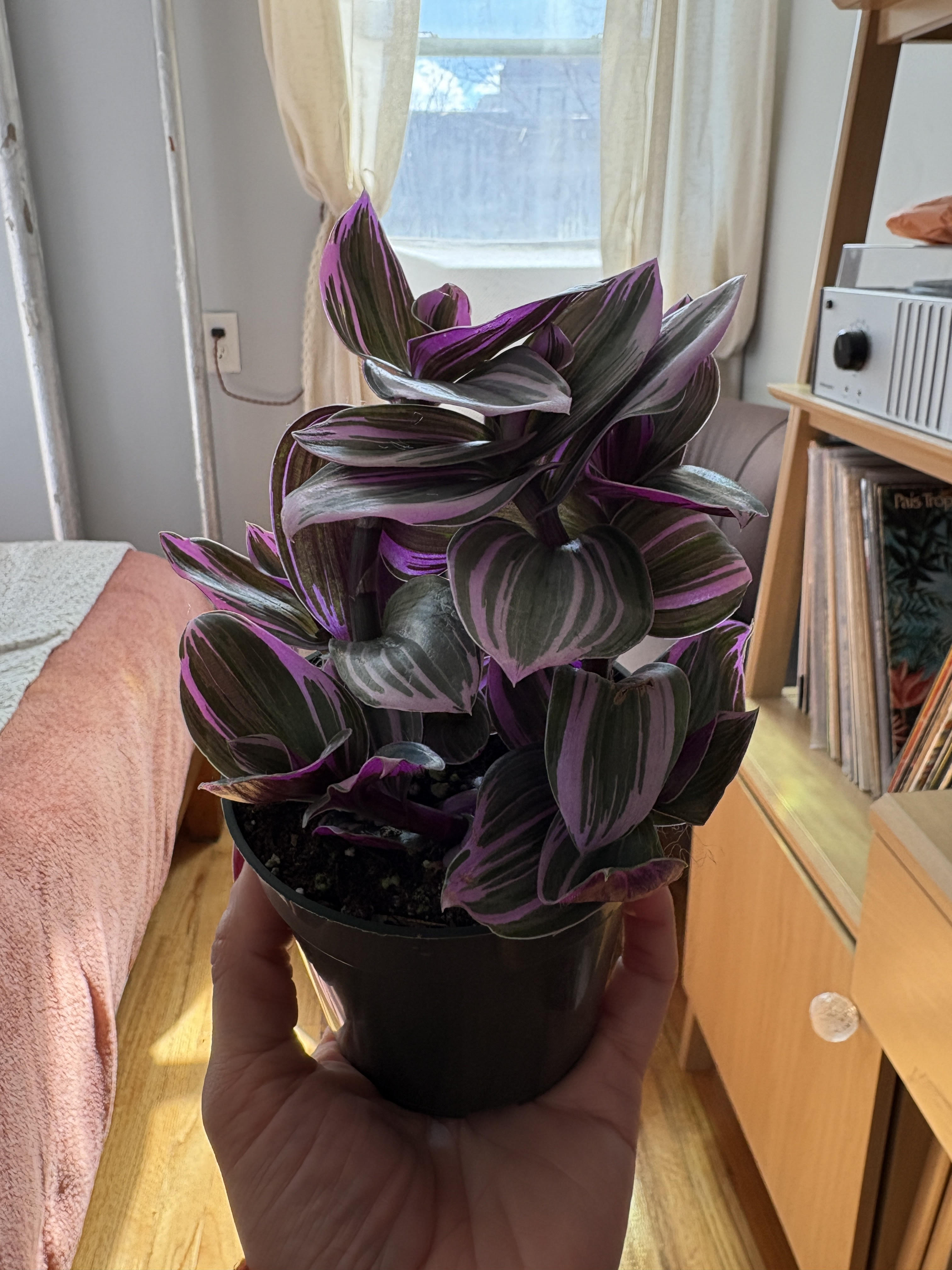
Tradescantia ‘Nanouk’ is a patented cultivar bred specifically for its color intensity — and it delivers. Each leaf is striped in vivid pink, white, and green on the top surface, with a solid magenta-purple underside. In bright light, the whole plant glows. It trails quickly, fills a hanging basket fast, and is one of the most photographed houseplants on the market for good reason.
It’s also genuinely easy to keep — forgiving of missed waterings, adaptable to a range of indoor conditions, and fast enough to show visible growth week to week during the growing season.
Toxicity note: Toxic to cats, dogs, and humans if ingested. The sap can also cause mild skin irritation in sensitive individuals — wash hands after handling.
What Makes This Plant Special
-
Exceptional color: Striped pink, white, and green leaves with solid magenta-purple undersides — more vivid than most Tradescantia varieties.
-
Patented cultivar: Nanouk was bred in the Netherlands specifically for compact growth and intense color. It’s more robust and colorful than older Tradescantia varieties.
-
Fast trailer: Vines extend quickly, making it ideal for hanging baskets, high shelves, and cascading displays.
-
Easy care: Tolerates imperfect conditions and irregular watering better than most colorful plants.
Ed’s Plant Profile
-
Botanical Name: Tradescantia albiflora ‘Nanouk’
-
Common Names: Tradescantia Nanouk, Bubblegum Tradescantia, Fantasy Venice, Wandering Dude
-
Family: Commelinaceae
-
Native Range: Cultivar bred in the Netherlands; species native to Brazil and Northern Argentina
-
Growth Habit: Trailing/vining; fast-growing
-
Toxicity: Toxic to cats, dogs, and humans if ingested; sap may irritate skin
Care Guide
-
Light: Bright indirect light is essential for maintaining the vivid pink and white coloration. In lower light, the leaves revert toward green and the plant becomes leggy. A south or east-facing window is ideal. Can tolerate some direct morning sun.
-
Water: Allow the top 1–2 inches of soil to dry between waterings. Tolerates some drought but not prolonged dryness — leaves will curl and lose color. Avoid waterlogging, which causes stem rot.
-
Soil: Well-draining potting mix. Standard indoor potting soil with added perlite works well.
-
Humidity: Average household humidity is fine. No misting required.
-
Temperature: 55–80°F. Keep away from cold drafts and temperatures below 50°F.
-
Fertilizer: Monthly at half strength with a balanced liquid fertilizer during spring and summer. Skip in fall and winter.
-
Pruning: Pinch back leggy stems regularly to encourage dense, bushy growth. As the plant matures, older stems can go bare at the base — propagate cuttings and tuck them back into the pot to fill gaps.
-
Propagation: Stem cuttings root easily in water or moist soil within 1–2 weeks. One of the easiest plants to propagate.
-
Pests: Generally resilient. Spider mites can appear in dry conditions — increase humidity and treat with insecticidal soap if needed.
Troubleshooting
-
Fading pink color, leaves turning green: Needs more light. Move to a brighter spot — the color intensity is directly tied to light levels.
-
Leggy stems with bare patches at the base: Normal as the plant matures. Propagate cuttings and tuck them back into the pot, or do a hard prune to encourage fresh growth from the base.
-
Curling or crispy leaves: Underwatering or low humidity. Water thoroughly and the plant should recover quickly.
-
Mushy stems: Overwatering or root rot. Remove affected stems, let soil dry, and reduce watering frequency.
-
Skin irritation after handling: The sap can cause mild irritation in sensitive individuals. Wash hands after pruning or propagating.
Read our full Tradescantia Care Guide for in-depth advice on pruning, propagation, and keeping the color vivid year-round.